
19 September 2026
MedicalBuilding a Practical Home Medical Kit for Emergencies
Learn how to build a practical home medical kit for emergency preparedness. From basic medications and first aid supplies to wound care, thermal blankets, and emergency lighting, discover what to stock and why it matters.
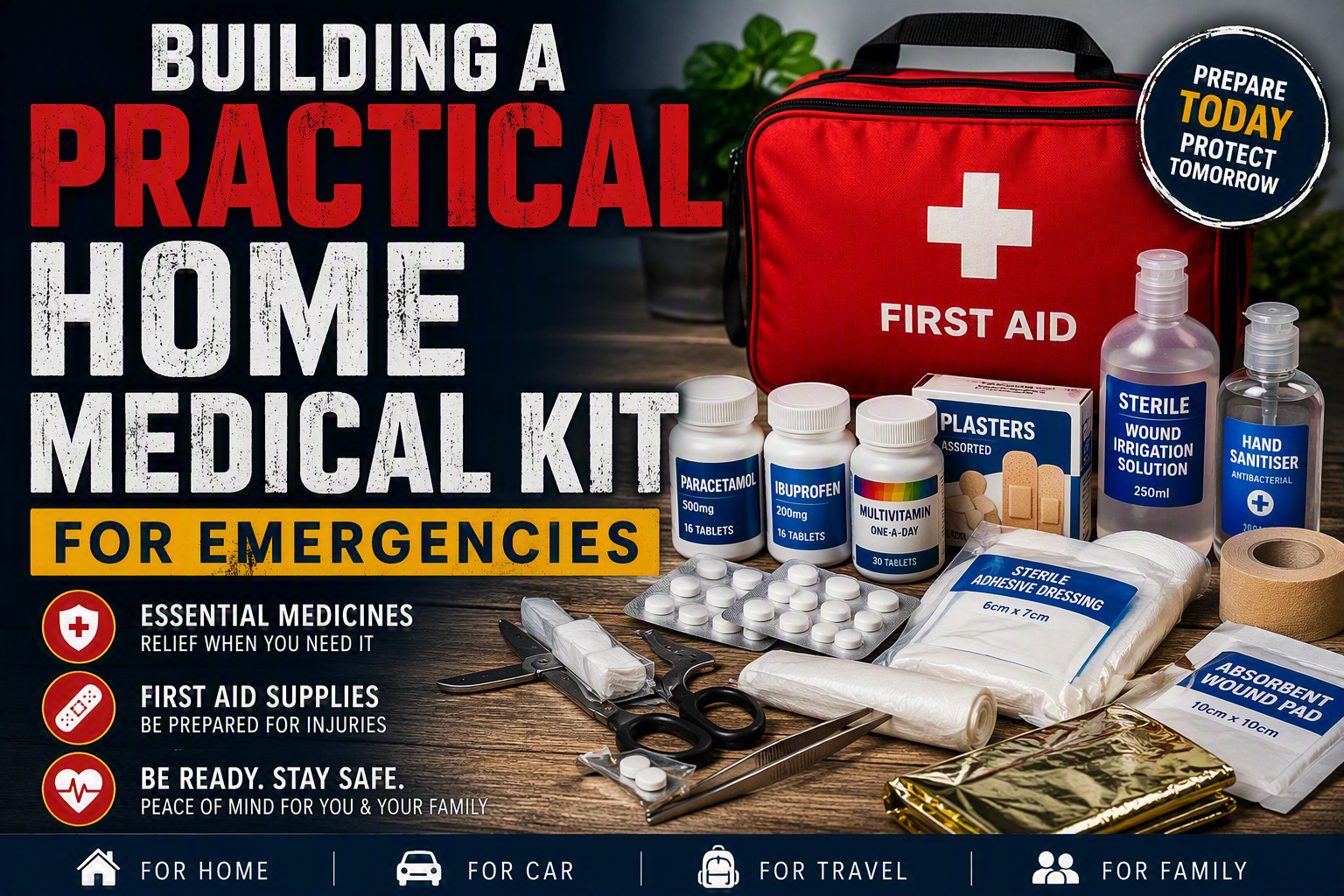
When people think about emergency preparedness, food, water, and power often come first. Yet one of the most overlooked areas is basic medical preparedness. No one can predict when healthcare services may be delayed, pharmacies may be closed, or simply when a family member may need treatment for a minor injury at an inconvenient time.
A well-stocked home medical kit is not about replacing doctors, nurses, or emergency services. It is about being ready to deal with everyday illnesses, minor injuries, and short-term disruptions while professional help is unavailable or delayed. The goal is simple: self-reliance where appropriate, and peace of mind when life becomes unpredictable.
Start With the Basics
One mistake many new preppers make is assuming they need a fully equipped field hospital from day one. In reality, the most useful items are usually the most ordinary.
A sensible starting point includes:
- Paracetamol
- Ibuprofen
- Aspirin (where appropriate)
- Adhesive plasters
- Multivitamins
- Vitamin C supplements
- Eye drops
- Ear drops
- Indigestion remedies
- Cold and flu medications
These are inexpensive, easy to find, and capable of dealing with many common ailments. In many cases, supermarket own-brand medicines contain the same active ingredients as their branded counterparts for a fraction of the cost. Checking the label rather than the logo can save a significant amount of money when building supplies.
Rather than making a large purchase all at once, many preparedness-minded households simply buy an extra packet of essentials during routine shopping trips. Over time, a modest reserve develops naturally without placing strain on the budget.
Don't Forget Children's Medicines
Households with young children have additional needs.
Anyone who has cared for a child with a fever at two o'clock in the morning knows the importance of having supplies ready before they are needed. Children's pain relief, infant thermometers, vapour rubs, and other age-appropriate medicines can be invaluable during periods when obtaining supplies quickly may be difficult.
Pay particular attention to expiry dates and rotate stock regularly. A medicine cupboard filled with out-of-date products offers little reassurance when it's needed most.
The Value of a Quality First Aid Kit
For those starting from scratch, a comprehensive first aid kit is often the best investment.
A good kit typically contains:
- Bandages
- Sterile dressings
- Adhesive tape
- Scissors
- Tweezers
- Antiseptic wipes
- Gloves
- Eye wash solutions
These kits are compact, affordable, and suitable for keeping in the home, vehicle, or workplace. They provide an excellent foundation and cover the majority of common first aid situations.
Think of a standard first aid kit as the "grab-and-go" solution. It handles the immediate problem while more specialised supplies can be built up over time if desired.
Preparing for More Than Minor Cuts
Minor plasters are ideal for small accidents, but larger injuries may require more substantial dressings.
Larger adhesive wound dressings, absorbent pads, and sterile gauze dressings provide options when a simple plaster just isn't enough. Whether it's a kitchen accident, a gardening injury, or an incident involving tools, having different sizes available can make treatment much easier until professional medical assistance is available.
This is where preparedness starts moving beyond convenience and into resilience.
Cleaning and Irrigating Wounds
Keeping a wound clean is often just as important as covering it.
Sterile wound irrigation solutions are designed to flush dirt and debris from injuries before dressing them. While not something every household owns, they can be a useful addition to a larger medical kit.
Alongside these, many preppers keep:
- Hand sanitiser
- Alcohol-based disinfectants
- Antiseptic sprays
- Sterile cleansing wipes
Good hygiene can prevent small injuries from becoming bigger problems, particularly during emergencies when healthcare access may be limited.
Supporting Sprains and Minor Injuries
Not every injury involves cuts and bleeding.
Support bandages, compression wraps, slings, and joint supports can all prove useful when dealing with minor strains, sprains, or muscle injuries.
Many of these items are relatively inexpensive and have long shelf lives. They are not the most exciting preparedness purchases, but when someone twists an ankle while carrying supplies or working in the garden, they quickly become some of the most appreciated items in the house.
Everyday Comfort Items Matter Too
Preparedness is not solely about major emergencies.
Small discomforts can feel much worse when shops are closed or access to supplies is restricted. For this reason, many people include a collection of everyday health items such as:
- Lip balm
- Cold sore treatments
- Clove oil
- Indigestion remedies
- Burn relief spray
- Throat lozenges
These products are often inexpensive, take up little room, and can provide a surprising amount of comfort during stressful situations.
Thermal Blankets: A Small Item With a Big Purpose
One item frequently overlooked is the thermal emergency blanket.
Often seen at road traffic accidents or outdoor rescue incidents, these lightweight foil blankets help retain body heat and occupy almost no storage space.
They are cheap enough to keep:
- In a vehicle
- In a home first aid kit
- In a bug-out bag
- In workplace emergency supplies
For the price, they offer exceptional value and deserve a place in almost every preparedness kit.
Add Light to Your Medical Supplies
Imagine trying to find a dressing, medicine, or pair of scissors during a power cut.
A small battery-powered torch stored alongside medical supplies solves that problem immediately.
Consider including:
- A compact LED torch
- Spare batteries
- A head torch for hands-free use
It is a simple addition, but one that becomes invaluable when visibility is poor.
Build Gradually, Not All at Once
Perhaps the most important lesson is this: preparedness is a journey, not a shopping spree.
Many experienced preppers build their medical supplies over months or years, adding items when they find a good price, identify a gap, or gain new knowledge. There is no need to spend hundreds of pounds overnight.
Start with a solid first aid kit, common medications, and a few essential supplies. As your confidence and understanding grow, expand your collection to meet your family's specific needs.
The best emergency medical kit is not necessarily the largest. It is the one that is thoughtfully assembled, well-organised, regularly maintained, and available when it matters most.
Final Thoughts
A home medical kit is ultimately about preparedness, not paranoia. Minor injuries, seasonal illnesses, power outages, transport disruptions, and temporary shortages occur more often than many people realise.
By keeping a sensible stock of medicines, dressings, first aid supplies, and comfort items, you can reduce reliance on last-minute shopping trips and feel better prepared for whatever comes your way.
No one hopes to need these supplies, but when the unexpected happens, having them ready can make all the difference.