

10 October 2026
FoodHow Much Food Should a UK Household Store for Emergencies?
Wondering how much food to store for emergencies in the UK? Learn how to build a practical two-week emergency food supply, discover essential cupboard staples, and download a handy printable checklist to keep your household prepared for unexpected disruptions.
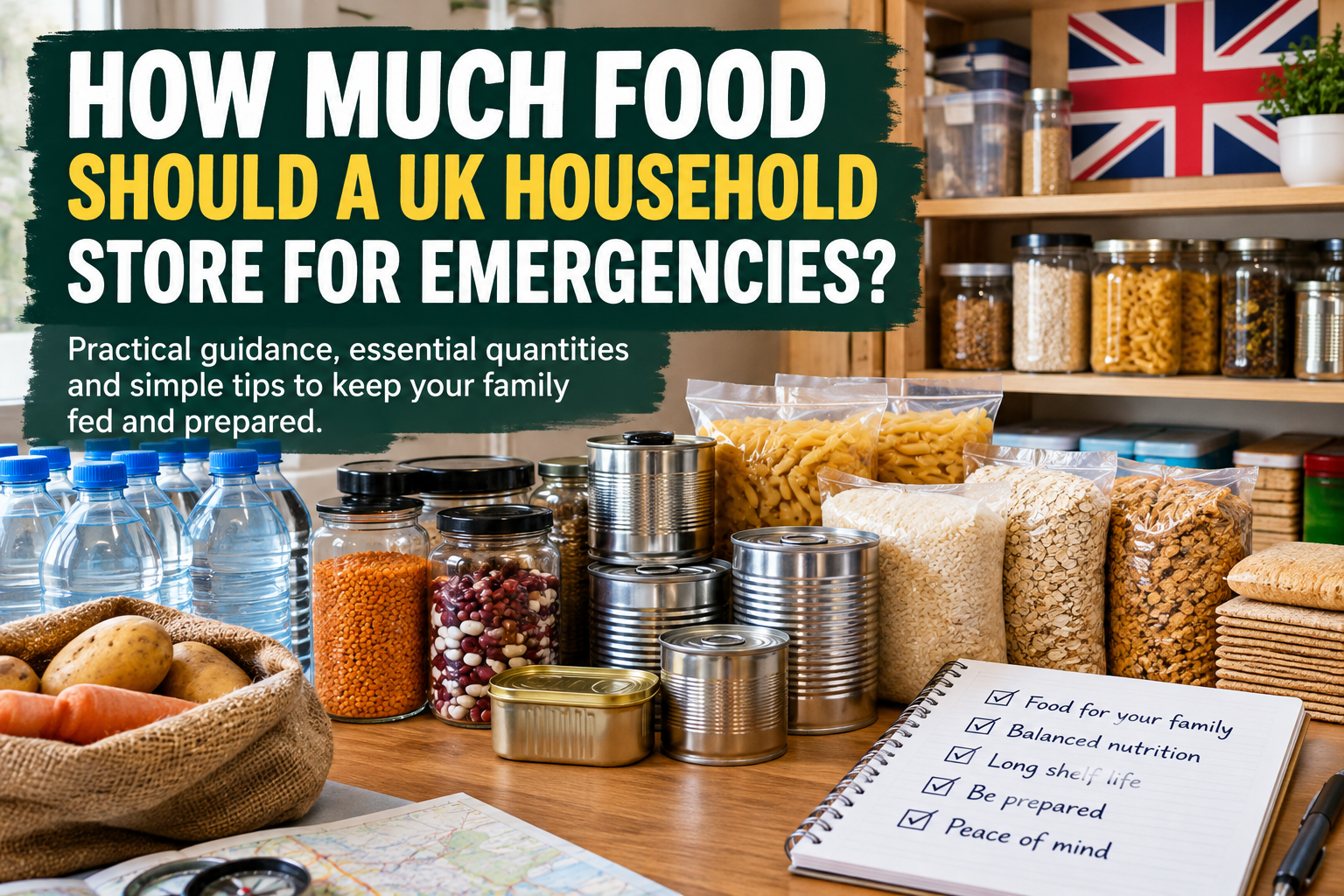
Most of us don't like to think about emergencies. Life is busy enough without worrying about what might happen if the power goes out, heavy snow closes the roads, or the weekly shop suddenly becomes difficult to get.
But having a small emergency food supply at home isn't about expecting the worst. It's about making life a little easier if the unexpected happens.
The good news is that emergency preparedness doesn't mean filling your garage with years' worth of tinned food. For most UK households, a sensible reserve can fit comfortably into a cupboard, pantry, or under-stairs storage space. And once it's in place, it provides something surprisingly valuable: peace of mind.
So, How Much Food Should You Store?
A good rule of thumb is to aim for around two weeks' worth of food and essential supplies for everyone in your household.
Two weeks is long enough to get through most situations that are likely to affect everyday life in the UK, whether that's severe weather, local flooding, temporary transport disruption, illness, or a period of financial uncertainty.
That doesn't mean buying everything at once. In fact, the easiest approach is often the simplest. Just add a few extra items to your regular shop each week and build your supplies gradually.
Before long, you'll have a reserve without really noticing the cost.
Think in Terms of Meals, Not Survival
One mistake people often make is focusing on "survival food."
In reality, the best emergency food is simply the food your family already enjoys eating.
If everyone hates lentils, don't buy twenty tins of them. If your children will happily eat baked beans, pasta, soup, cereal, and tinned fruit, those are the foods that deserve a place in your emergency cupboard.
The goal isn't to survive on the bare minimum. It's to maintain a sense of normality during a stressful situation.
A familiar meal can go a surprisingly long way towards keeping morale high.
What Does a Two-Week Supply Look Like?
For a single adult, a two-week reserve might include a mixture of:
- Rice and pasta
- Oats and breakfast cereals
- Tinned vegetables
- Tinned fruit
- Baked beans
- Tinned fish or meat
- Long-life milk
- Soups
- Crackers
- Tea, coffee, and favourite snacks
For couples or families, simply scale up the quantities according to the number of people in the household.
You don't need military precision. The aim is to have enough food to comfortably prepare breakfast, lunch, and dinner for everyone if shopping becomes difficult for a short period.
Don't Forget Water
Food tends to get all the attention, but water is just as important.
Most emergencies in the UK are unlikely to affect water supplies, but keeping some bottled water on hand is still a sensible precaution.
Experts generally recommend storing enough drinking water for several days, especially if you're preparing for severe weather events or disruptions to local infrastructure.
If you have pets, remember to include water for them too.
Choose Foods With a Long Shelf Life
The easiest foods to store are the ones that don't require refrigeration and remain usable for months or even years.
Some excellent choices include:
- Tinned soups
- Baked beans
- Tinned fish
- Tinned vegetables
- Tinned fruit
- Rice
- Pasta
- Couscous
- Oats
- Long-life milk
- Dried fruit
- Peanut butter
- Stock cubes
- Cooking oil
The beauty of these foods is that they're inexpensive, widely available, and already part of many households' regular shopping habits.
Remember Everyone's Needs
Every household is different.
If you have young children, you'll want to include baby food, formula, and any favourite foods that help maintain routines.
If someone follows a special diet, make sure your emergency supplies reflect that. Gluten-free products, diabetic-friendly foods, allergy-safe options, and prescription nutritional products should all be included where needed.
And don't overlook your four-legged family members. A small stock of pet food can be just as important as your own supplies.
The Best Emergency Food Is the Food You Rotate
One of the simplest ways to build and maintain a food reserve is to follow a "use what you store, store what you use" approach.
When you buy an extra tin of soup or packet of pasta, place it at the back of the cupboard. Use the older items first and replace them as part of your normal shopping routine.
This keeps your emergency supplies fresh and means nothing goes to waste.
It's a simple habit, but it makes a big difference.
Preparedness Without Panic
Images of overflowing bunkers and shelves stacked floor to ceiling with supplies can make emergency preparation seem extreme. The reality is much less dramatic.
For most UK families, a well-stocked cupboard containing around two weeks' worth of food and a small supply of water is more than enough to handle the vast majority of short-term disruptions.
Think of it as an insurance policy you can eat.
You hope you'll never need it, but if the weather turns, finances become tight, or circumstances suddenly change, you'll be grateful it's there.
And perhaps that's the real value of emergency food storage. Not fear, not panic, but the quiet reassurance that your household is prepared for whatever life decides to throw your way.
If you would prefer to build a longer-term supply pantry, why not use our PrepRation calculator?