

2 October 2026
FoodMicrogreens: The Forgotten Prepper Superfood – Why I Always Keep Sprouting Seeds in Storage
Microgreens are one of the easiest ways to grow fresh, nutrient-rich food when space, time and resources are limited. Discover why sprouting seeds deserve a place in every prepper’s food storage, how to grow microgreens indoors, and how they can provide a valuable source of fresh nutrition during an emergency.
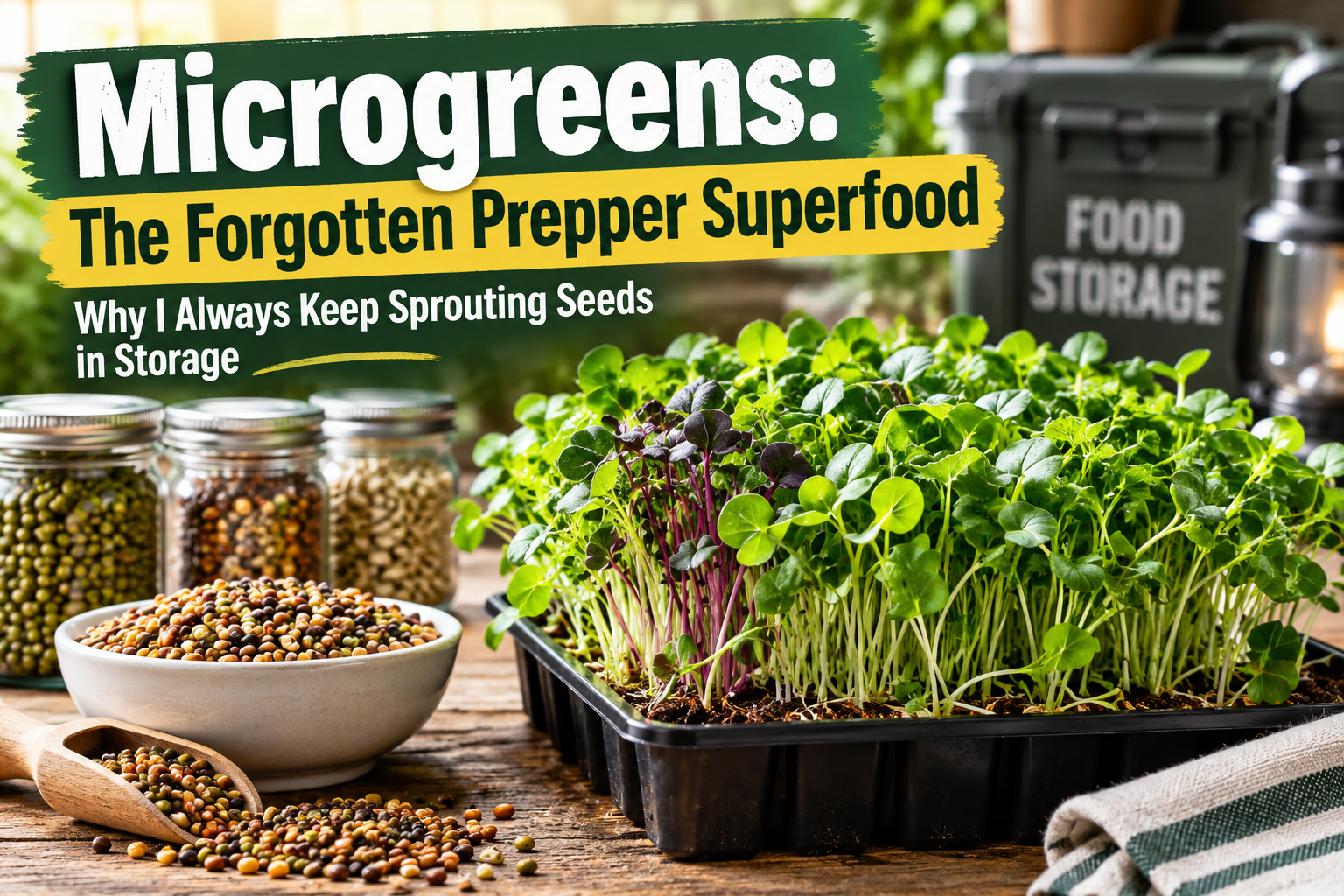
When the pandemic lockdowns hit six years ago and supermarket shelves were stripped bare, many people suddenly realised how fragile food supply chains could be. For us, however, one thing we were never worried about was access to fresh greens.
No, we don't have a large vegetable garden. We grow a few herbs, but nothing significant enough to feed the family. Our solution was much simpler: sprouting seeds.
Fresh Greens in Just Four Days
For years I've kept bags of mustard seeds and radish seeds stored away specifically for sprouting. Recently we enjoyed a batch on cheese sandwiches, and the combination was fantastic and I regularly throw a selection into my salads. The mild, slightly spicy mustard sprouts paired perfectly with the peppery kick of the radish sprouts.
What makes sprouting such a valuable preparedness skill is the speed. From a handful of dry seeds to a jar full of fresh greens takes just four days.
A small amount of seed produces a surprising quantity of food. One recent batch started as a handful of seeds sitting only a couple of centimetres deep in a jar. Four days later, the jar was packed so tightly with sprouts that it was difficult to remove them.
Once harvested, the sprouts will typically keep for four to five days in the refrigerator, giving you a continuous supply of fresh greens with very little effort.
Small Seeds, Big Nutrition
One of the reasons sprouting became popular during my healthy eating phase years ago is the nutritional boost that occurs during germination. The sprouting process activates the seed, making nutrients more available and producing fresh, living food from something that can sit in storage for years.
In fact, the sprouts we've been eating recently came from seeds I bought six years ago. Properly stored seeds have an impressive shelf life, making them an excellent addition to any long-term food store.
Minimal Equipment Required
You don't need expensive equipment to start sprouting.
A simple glass jar and a method for draining water are enough. Many people improvise their own setups for free using household items.
That said, purpose-made sprouting kits are widely available and make the process easier. My own setup uses two jars fitted with mesh lids for easy rinsing, along with stands to hold the jars upside down for draining into ceramic drip trays.
The method itself is straightforward:
1. Soak the seeds.
2. Drain and rinse regularly.
3. Keep them moist but not submerged.
4. Wait four days.
5. Harvest and enjoy.
The One Important Requirement
There is one catch.
Sprouts need frequent rinsing throughout the growing process, so a reliable supply of clean water is essential. In most circumstances this isn't a problem, but it's worth considering if you're viewing sprouting as part of your emergency preparedness plan.
Cleanliness is also important. As with any food grown in warm, moist conditions, good hygiene practices help ensure a safe crop.
Beyond Mustard and Radish
Mustard and radish are favourites in our household, but they're far from the only options.
Mung beans are another staple that I always keep in storage. If you enjoy the bean sprouts commonly found in Chinese dishes, you can easily grow your own at home.
Other popular sprouting choices include:
· Lentils
· Peas
· Alfalfa
· Broccoli seeds
· Fenugreek
· Clover
Many people also grow pea shoots, which can be repeatedly harvested and offer an excellent source of fresh greens throughout the year.
A Prepper's Secret Weapon
Sprouting seeds may not be the most exciting item in a preparedness pantry, but they solve a problem that many food stores overlook: fresh produce.
They are cheap, compact, highly nutritious, require minimal equipment, and can remain viable for years. Most importantly, they provide fresh greens in less than a week when fresh vegetables may be difficult or impossible to obtain.
Whether you're interested in healthy eating, self-sufficiency, or simply adding another layer to your preparedness plans, a few bags of sprouting seeds could become one of the most valuable items in your cupboard.
Sometimes the simplest solutions are the best ones.