
12 September 2026
Norway’s New Emergency Preparedness Leaflet Sets a Standard the UK Should Follow
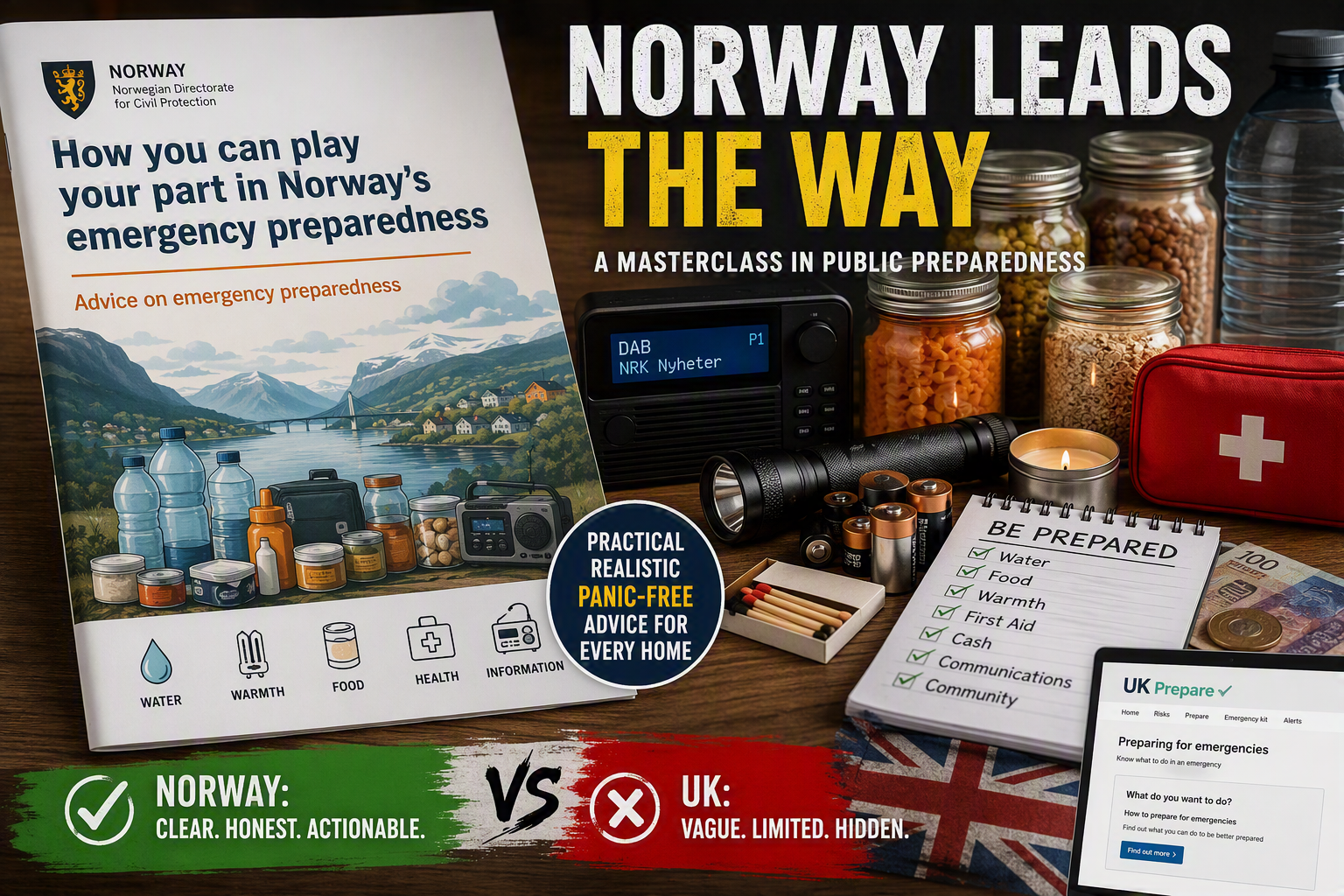
Norway's emergency preparedness leaflet is a masterclass in resilience planning, covering water storage, food supplies, first aid, cash, communications and community support. Discover why many believe the UK should adopt a similar approach to public preparedness.
When it comes to emergency preparedness, many governments struggle to strike the right balance. Some avoid discussing genuine risks for fear of causing alarm, while others overwhelm citizens with lengthy guidance that few people will ever read.
Norway appears to have found a middle ground.
The country's recently released civil protection leaflet provides practical, calm, and actionable advice designed to help ordinary households become more resilient during emergencies. Whether the threat comes from extreme weather, infrastructure failures, cyber disruptions, or geopolitical instability, the leaflet focuses on one simple principle: preparedness is everyone's responsibility.
For UK preppers and resilience-minded citizens, it also raises an uncomfortable question: why does the UK still lack a similarly clear and widely distributed preparedness guide?
A Refreshingly Honest Approach
One of the strongest aspects of the Norwegian leaflet is its tone.
Rather than focusing solely on floods, storms, or house fires, it openly acknowledges the realities of modern risks, including:
- Climate-related events
- War and international instability
- Digital and cyber threats
- Utility disruptions
- Supply chain interruptions
Importantly, the leaflet does not resort to fearmongering. Instead, it encourages people to think about realistic scenarios that could affect everyday life.
Simple questions such as:
- What would you do if the power failed for several days?
- How would your family cope without running water?
- How would you stay informed if communication systems went down?
These prompts encourage people to assess vulnerabilities without creating panic.
Water: The Foundation of Preparedness
The leaflet places significant emphasis on water storage, and rightly so.
Norwegian authorities recommend storing approximately 20 litres of drinking water per person. According to the leaflet, this quantity should cover the minimum requirements for one week if the domestic water supply fails.
Beyond simply telling people to store water, the guide also explains:
- How to clean storage containers
- Appropriate storage conditions
- The importance of keeping water in cool, dark locations
- Long-term storage considerations
This practical guidance addresses one of the most common preparedness questions. Even experienced preppers regularly debate water storage methods, so including clear instructions for the general public is a sensible move.
While many preparedness enthusiasts would advocate storing significantly more than the minimum recommendation, the leaflet succeeds by establishing a realistic baseline that most households can achieve.
Heat and Light During Power Outages
A prolonged loss of electricity is among the most likely emergency scenarios many households could face.
The Norwegian guidance recommends keeping:
- Warm clothing
- Blankets and sleeping bags
- Candles and matches
- Torches or headlamps
- Spare batteries
It also discusses alternative heating options such as:
- Wood-burning stoves
- Indoor-rated gas heaters
- Paraffin heaters
- Backup power systems
Perhaps most importantly, the advice assumes citizens are capable of using these tools responsibly. Rather than avoiding practical recommendations due to safety concerns, the guide provides sensible precautions while trusting people to apply common sense.
The leaflet also includes straightforward suggestions for reducing heat loss, including:
- Closing doors between rooms
- Hanging blankets over doorways
- Covering windows with curtains or blankets
These low-cost measures could make a significant difference during winter power outages.
Food Storage Without the Fear
The food section contains some of the most valuable advice in the entire document.
Norwegian households are encouraged to maintain enough food for everyone in the home for at least one week.
The emphasis is not on buying specialist survival rations. Instead, citizens are advised to store extra quantities of foods they already eat.
Recommended items include:
- Tinned foods
- Beans and pulses
- Oats
- Rice
- Pasta
- Dried fruit
- Honey
- Nuts
- Energy bars
- Biscuits
This aligns perfectly with one of the fundamental preparedness principles: store what you eat and eat what you store.
The guide also reminds households to consider allergies, dietary requirements, and any specialist foods family members may depend upon.
Another welcome inclusion is advice to regularly inspect and test emergency cooking equipment. A camping stove that has sat untouched in a cupboard for years is not much use during a real emergency.
The Importance of Cash
One particularly noteworthy section deals with payments.
While many countries continue their transition toward cashless systems, Norway advises citizens to keep a supply of cash at home in smaller denominations.
The reasoning is straightforward: payment systems can fail.
Power outages, cyber incidents, network disruptions, or banking system problems could temporarily prevent card transactions from working. Having some physical cash available provides an additional layer of resilience.
The leaflet also suggests maintaining accounts with more than one banking institution to reduce dependence on a single provider.
Medical Preparedness and First Aid
Medical preparedness receives substantial attention.
Recommendations include:
- Maintaining a well-stocked first aid kit
- Carrying first aid supplies in vehicles
- Keeping an additional seven-day supply of essential medications where possible
- Learning basic first aid skills
Perhaps the most striking recommendation is the inclusion of iodine tablets for households with adults and children under the age of 40.
The leaflet explains that these should only be taken when instructed by authorities and are intended to protect against radioactive iodine exposure in the event of a nuclear incident.
Whether citizens ever need such protection is beside the point. Including clear guidance on the subject demonstrates a willingness to acknowledge risks that many governments rarely discuss publicly.
Hygiene Matters More Than Most People Realise
Preparedness discussions often focus on food, water, and power, but hygiene is equally important during emergencies.
The leaflet recommends storing:
- Toilet paper
- Wet wipes
- Hand sanitiser
- Disposable gloves
- Waste bags
Poor sanitation can quickly create secondary health problems, particularly during extended disruptions to water services. By highlighting hygiene as a preparedness priority, the guide addresses a frequently overlooked area of resilience planning.
Staying Informed
Communication becomes critical during any crisis.
Norway's recommendations include:
- Battery-powered radios
- Wind-up radios
- Solar-powered radios
- Power banks
- Written lists of important phone numbers
The advice to keep a physical list of key contacts deserves particular recognition. Many people rely entirely on smartphone contact lists and may struggle to recall important numbers if their device is unavailable.
The leaflet also encourages people to familiarise themselves with local emergency arrangements and assembly points before a crisis occurs.
Fighting Misinformation
One of the most surprising sections focuses on information literacy.
The guide warns citizens that crises often produce confusion, rumours, and deliberate disinformation.
Readers are urged to:
- Verify information sources
- Consider credibility before sharing content
- Be cautious of rumours
- Think critically about the information they consume
This reflects a modern understanding of emergencies. In today's digital world, misinformation can spread almost as quickly as the crisis itself.
Community Preparedness
Another standout feature is its emphasis on neighbours and local communities.
The leaflet effectively encourages citizens to create networks of mutual support by:
- Discussing emergency plans with family and neighbours
- Identifying vulnerable individuals who may need assistance
- Sharing skills and resources
- Working together during crises
Preparedness is often portrayed as an individual activity, but resilience is strongest when communities cooperate. Norway's approach recognises that no household exists in isolation.
Mental Resilience Matters Too
Few preparedness guides devote space to psychological wellbeing, yet Norway includes an entire section on mental health during emergencies.
Key recommendations include:
- Maintaining routines where possible
- Eating regular meals
- Practising good hygiene
- Staying connected with friends and family
- Focusing on actions within your control
This may be one of the most valuable lessons in the entire document. During prolonged disruptions, maintaining morale and mental resilience can be just as important as maintaining physical supplies.
A Model Worth Copying
No preparedness leaflet will satisfy experienced preppers entirely. Most would advocate storing more food, more water, additional medical supplies, and greater consideration of security.
However, that misses the point.
The Norwegian leaflet is not designed for dedicated preparedness enthusiasts. It is designed for ordinary citizens who may never have considered emergency preparedness before.
In that role, it succeeds remarkably well.
It provides clear guidance, avoids sensationalism, acknowledges real-world threats, promotes individual responsibility, encourages community resilience, and offers achievable steps that almost any household can take.
If the goal of public preparedness is to create a more resilient population without causing panic, Norway may have produced one of the best examples seen anywhere in Europe.
The UK would do well to take note. Rather than reinventing the wheel, policymakers could learn a great deal from a leaflet that manages to be practical, reassuring, and genuinely useful all at the same time.
Citation: Based on video presented by @UKUrbanPrepper UKUrbanPrepper YouTube