

2 October 2026
General PreppingFlood Ready: Practical Ways to Prepare Your UK Home for Flooding
Learn practical ways to prepare your home for flooding, from raising electrical points and protecting important documents to storing emergency supplies and improving flood resilience.
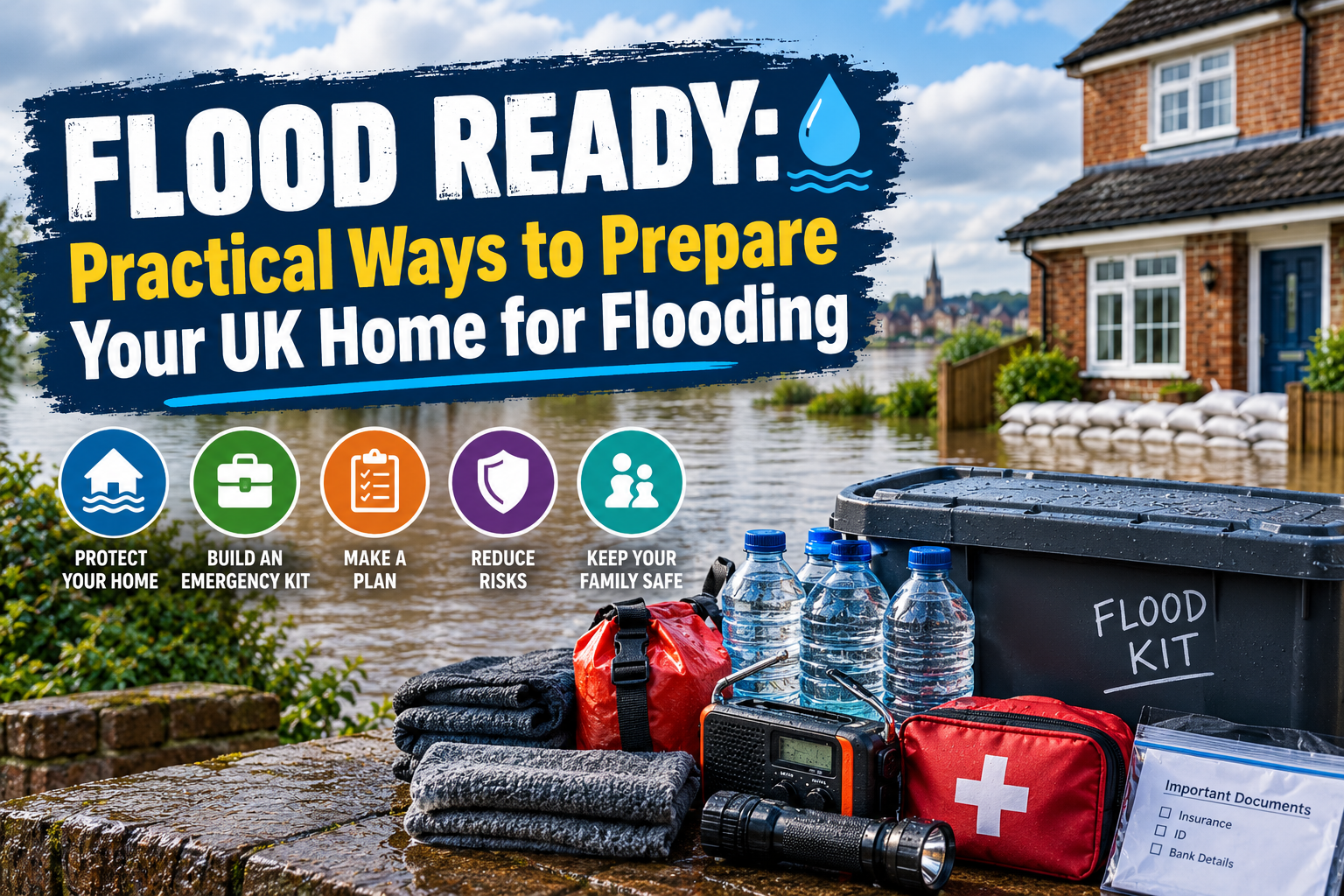
Flooding is one of the most realistic emergencies many UK households could face. Unlike some disasters that arrive with little warning, flooding often provides a small window of opportunity to act. The question is whether you've already done the preparation.
For many homeowners, flood preparedness doesn't start when the rain begins. It starts months or even years beforehand. The families that recover quickest are usually those who took sensible precautions long before floodwater appeared at the front door.
The good news is that preparing for flooding doesn't have to cost a fortune. Small changes made over time can dramatically reduce damage, protect important possessions, and make life much easier during and after a flood.
Understand Where the Water Might Go
One of the biggest mistakes people make is assuming flooding only affects properties next to rivers.
In reality, water will always find the easiest route. Surface water flooding from intense rainfall can affect homes miles from the nearest river, while overwhelmed drains can cause roads and gardens to become temporary waterways.
Take a look around your property during heavy rain. Does water collect in certain areas? Are there low spots in the garden? Does the driveway slope towards the house? Understanding how water could reach your home is the first step in planning how to defend it.
Simple observations today can prevent expensive surprises tomorrow.
Think About Flood Resilience During Renovations
Most flood preparedness articles focus on what to do when flooding is imminent. A better approach is to think about resilience whenever improvements are being made to your home.
If you're renovating, consider where your electrical sockets are located. In many older properties, sockets sit just a few inches above floor level. If floodwater enters the house, they can quickly become submerged.
Raising electrical sockets, network points, television connections, and other services higher up the wall can significantly reduce damage and speed up recovery after a flood. It may seem like a small detail, but it could save thousands of pounds in electrical repairs.
The same principle applies to boilers, fuse boxes, and broadband equipment. The higher critical infrastructure is located, the less vulnerable it becomes.
Store Important Documents Upstairs
Most people keep passports, insurance documents, birth certificates, mortgage paperwork, and other important records in a filing cabinet or drawer on the ground floor.
Unfortunately, that's often the first place floodwater reaches.
Instead, consider storing important documents on an upper floor in waterproof containers. Better yet, scan critical paperwork and keep encrypted digital backups as well.
When floods occur, replacing damaged furniture is frustrating. Replacing years of paperwork can be far worse.
Think of it this way. If you had to leave your home with just a few minutes' notice, would your essential documents survive?
Keep Emergency Supplies Above Potential Flood Levels
Many preparedness-minded households maintain emergency food and water supplies. However, where those supplies are stored is just as important as having them.
A carefully built emergency food reserve is of little use if it's sitting in a garage that fills with water.
Where possible, keep emergency food stores, bottled water, medical supplies, power banks, radios, torches, and spare batteries on upper floors or elevated shelving. If floodwater affects the ground floor, you'll still have access to vital supplies.
The goal isn't simply to store emergency equipment. It's to ensure you can actually reach it when you need it.
Have a Flood Action Plan
When flood warnings are issued, time suddenly becomes very valuable.
A clear flood action plan removes much of the uncertainty. Everyone in the household should know what needs to happen and in what order.
Perhaps one person moves valuables upstairs while another prepares the emergency kit. Maybe older relatives need assistance or pets need specific arrangements.
These decisions are much easier when they've been discussed beforehand.
You don't need a complicated document. A simple checklist can make all the difference when stress levels rise.
Invest in Property-Level Defences
Not every property requires expensive flood barriers, but some basic protective measures are worth considering if you live in a vulnerable area.
Flood gates, door barriers, airbrick covers, and non-return valves can all help limit the amount of water entering a property. While few measures offer complete protection, slowing water ingress often provides crucial extra time to react.
Even relatively inexpensive solutions can reduce the severity of flooding and limit the clean-up required afterwards.
Think of these measures as buying time rather than guaranteeing victory.
Look Beyond the House
Flood preparedness shouldn't stop at the front door.
Garden furniture, tools, fuel containers, generators, bicycles, and vehicles can all be damaged by rising water. Strong currents can also turn loose objects into hazards.
When severe weather is forecast, moving vehicles to higher ground and securing outdoor equipment should form part of your routine preparations.
A ten-minute job today could prevent significant losses tomorrow.
Know How to Shut Off Utilities
If floodwater begins entering the property, being able to isolate electricity, gas, and water quickly is an important safety measure.
Every adult in the household should know where utility shut-offs are located and how to operate them safely.
In an emergency, you may not be home. Someone else may need to act.
Knowledge costs nothing, yet it is one of the most valuable preparations you can make.
Prepare for Life After the Flood
Many people focus solely on surviving the flood itself. Few think about the weeks that may follow.
Flood recovery can be slow. Homes may require drying, cleaning, repairs, and inspections before life returns to normal.
Having emergency funds, insurance details readily available, backup accommodation options, and a record of valuable possessions can significantly reduce stress during recovery.
Taking photographs of rooms and important belongings before a flood occurs can also simplify insurance claims if the worst happens.
Sign Up for Flood Warnings Before You Need Them
One of the most valuable flood preparation measures is completely free.
Many people don't realise that flood warnings are available in advance through the Environment Agency's Flood Warning Service. Rather than relying on social media rumours or noticing rising water yourself, you can receive official alerts by phone, text message, or email when flooding is expected in your area.
Understanding the difference between the warnings is important:
Flood Alert means flooding is possible and you should begin preparing. This is the time to check weather forecasts, charge power banks, move vehicles if necessary, and ensure your emergency kit is ready.
Flood Warning means flooding is expected and immediate action is required. This is when you should implement your flood plan, install any flood barriers, move valuables and important belongings upstairs, and closely monitor official updates.
Severe Flood Warning is the highest level of warning. It indicates a danger to life from flooding. At this stage, you should follow emergency service instructions without delay and be prepared to evacuate immediately.
Many households lose valuable preparation time simply because they receive warnings too late or fail to recognise their significance. Signing up for alerts ensures you receive information directly from official sources rather than hearing about the situation second-hand.
It's also worth keeping a battery-powered radio available. Severe weather can occasionally disrupt power supplies or telecommunications, and a radio provides an alternative way to receive important updates if other methods fail.
The earlier you know a flood is coming, the more options you have. In many cases, a few hours' warning can be the difference between moving valuables to safety and watching them sit in rising water.
Useful resources
UK Government Flood alerts and warnings: Flood alerts and warnings - GOV.UK
BBC UK Flood Warnings: Flood warnings - BBC Weather
Final Thoughts
Flood preparedness is not about panic. It's about reducing risk.
Raising electrical points above likely flood levels, storing important documents upstairs, keeping emergency food reserves out of harm's way, and making sensible improvements to your property can all help minimise the impact of flooding. None of these actions are particularly dramatic. Most are simple, affordable, and can be done gradually over time.
That's often the hallmark of good preparedness. Small actions. Big benefits.
Because when floodwater is rising outside and everyone else is rushing to figure out what to do, you'll already have a plan, your essentials will be protected, and your home will be far better prepared to weather the storm.