

17 October 2026
General PreppingEmergency Cash at Home UK: A Practical Strategy for Financial Preparedness
Learn how to build an emergency cash reserve at home in the UK. Discover how much cash to keep, which denominations are most useful, how to store it securely and why physical money belongs in a practical household preparedness plan.
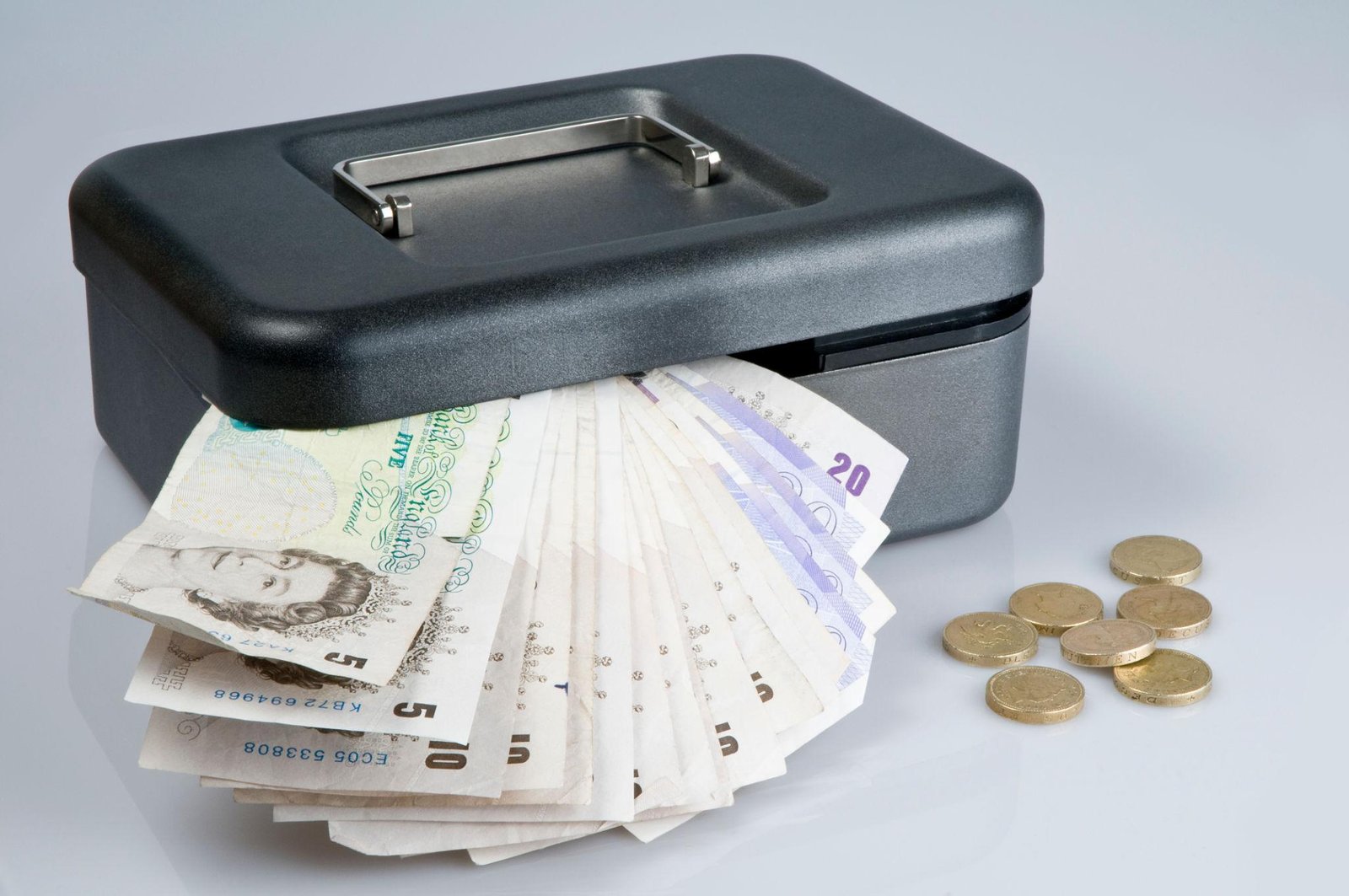
In a world where contactless payments, banking apps and online shopping have become part of everyday life, it is easy to forget something rather basic: physical cash still has an important role to play.
Most of us rarely think about carrying banknotes any more. A phone, a bank card or a smartwatch is usually enough to get through the day. But what happens when the power goes out, your local cash machine stops working, or a technical problem prevents shops from accepting electronic payments?
Suddenly, having a little physical money available can make a real difference.
For anyone building a practical preparedness plan, keeping emergency cash at home in the UK is a simple, relatively inexpensive step that deserves consideration. It is not about expecting a financial collapse or withdrawing your savings from the bank. It is about having another option when the systems we normally depend on become temporarily unavailable.
In this guide, we will look at how much emergency cash to keep, which banknotes and coins are most useful, how to store your money securely and how to make cash part of a wider household emergency strategy.
Why emergency cash still matters
Modern banking systems are generally reliable, but they depend on technology, communications networks and supporting infrastructure. Disruptions can affect individual banks, payment providers, shops or entire regions.
The Bank of England recognises the importance of operational resilience across financial services, including the ability to respond to IT outages, cyberattacks and other significant disruptions.
For ordinary households, the practical implications are straightforward.
Imagine a severe storm causes a prolonged power cut in your area. Your phone still has some battery, but mobile coverage is unreliable. Your local supermarket cannot process card payments, and the nearest cash machine is unavailable.
You might have plenty of money in your bank account, yet still struggle to pay for basic necessities at that moment.
Physical cash offers an alternative in circumstances where a retailer is open and willing to accept it.
It is worth remembering, though, that cash is not a universal solution. Shops may close during a power cut, their tills may not work, and they may be unable to process transactions safely. Cash is a useful backup, not a guarantee that you will be able to buy everything you need.
Situations where emergency cash could help
-
Power cuts: Some retailers may be unable to operate their normal electronic payment systems.
-
Banking outages: Your banking app, card authorisation or online banking service may be temporarily unavailable.
-
Telecommunications failures: A loss of connectivity can affect payment terminals and banking services.
-
Severe weather: Roads may be blocked, transport disrupted and local services temporarily affected.
-
Evacuation: You may need to pay for transport, refreshments or other immediate expenses while away from home.
-
Unexpected household emergencies: A local tradesperson or small independent retailer may prefer cash for an immediate transaction.
The aim is not to predict precisely what will go wrong. It is to reduce the number of things that can catch you unprepared.
How much emergency cash should you keep at home in the UK?
There is no single amount that suits every household. A person living alone with minimal expenses will have different needs from a family with children, pets and a car.
Your emergency cash reserve should reflect what you might reasonably need to pay for during a short disruption.
As a starting point, consider the following illustrative targets.
|
Household situation |
Suggested starting reserve |
|---|---|
|
Individual with low immediate expenses |
£50–£100 |
|
Typical small household |
£100–£200 |
|
Family with children or additional responsibilities |
£200–£300 |
|
Household with specific transport or accessibility needs |
Calculate a tailored amount |
These are practical planning examples, not official UK government recommendations. Your circumstances and budget should determine the final amount.
If money is tight, even £20–£50 in accessible emergency cash is a useful starting point. There is no need to sacrifice food, heating, debt repayments or essential savings to build a large cash reserve.
Calculate your own emergency cash target
Think about the expenses you might face if electronic payments were unavailable for a day or two.
For example:
-
Emergency food or drinking water: £30
-
Local transport: £20
-
Essential household supplies: £20
-
Unexpected small expenses: £30
That gives you a hypothetical reserve of £100.
Your own figure could be higher or lower. If you have adequate food, water and other essentials stored at home, you may need less cash for immediate purchases. If you depend on public transport or have family members with additional needs, you may want a larger buffer.
A sensible strategy is to start small, build gradually and keep the reserve within your means.
Remember that physical cash is only one part of financial preparedness. An accessible bank account and a wider emergency fund remain important for expenses that cash at home cannot realistically cover.
Which banknotes and coins should you keep?
The denomination of your emergency cash matters almost as much as the total amount.
Imagine having £200 at home, but all of it is in £50 notes. You might find that a small shop cannot give you change for a modest purchase.
A mixture of denominations gives you greater flexibility.

Useful for small purchases, refreshments and situations where change is limited.

A practical middle denomination for groceries, basic supplies and local transport.

Convenient for larger purchases, provided the retailer can accept them and give change.

A small selection of pound coins and lower-value coins can help with exact payments and small purchases.
For a £100 reserve, one possible arrangement is three £20 notes, three £10 notes and two £5 notes, plus a small separate selection of coins. That gives you £100 in banknotes, with coins added on top.
You do not need to follow a rigid formula. The important thing is to avoid relying entirely on large notes and to remember that not every retailer will accept every denomination in every situation.
Where should you store emergency cash?
Keeping cash at home introduces a different risk: theft, fire, flooding or simply forgetting where you put it.
The answer is to store it securely, discreetly and in a place that makes sense as part of your wider household preparedness plan.
1. Use a secure storage container
A small lockable safe can provide a reasonable level of protection against casual theft. A properly rated fire-resistant safe may offer additional protection, although fire resistance does not necessarily mean the container is waterproof or suitable for every type of flood exposure.
Choose something appropriate for your home, budget and the amount you intend to store.
2. Keep it discreet
There is little benefit in having emergency cash if everyone who visits your home knows where it is kept.
Avoid discussing the amount you hold with people who do not need to know. Store it somewhere secure rather than leaving it in a bedside drawer, handbag or an obvious household container.
3. Consider fire and water damage
Keep banknotes away from sinks, plumbing, damp areas and locations that could flood. Consider the risks associated with your particular property.
A fire-resistant container is worth considering, but do not assume it will protect your cash under every circumstance. Follow the manufacturer's guidance and keep the storage location sensible.
4. Make sure you can access it
A safe that is impossible to open during an emergency is not particularly useful. Keep access arrangements practical, and make sure another trusted household member knows what to do if you are unavailable.
The aim is to balance security with accessibility.
5. Keep the reserve separate from everyday spending
Treat your emergency cash as a contingency fund, not as spare money for routine shopping.
You could keep a simple note of the amount and denominations without recording the precise hiding place in an unsecured document. Check the reserve occasionally and replace money if you need to use it.
Should you keep all your emergency money at home?
No. There is a balance to strike.
Cash held at home can be useful during a temporary payment disruption, but it can also be lost, stolen or damaged. It does not earn interest, and it cannot replace the security and flexibility of money held in an appropriate bank account.
A more resilient household financial strategy has several layers.
Layer 1: Emergency cash at home
A modest amount for immediate essentials if electronic payments are temporarily unavailable.
Layer 2: Accessible money in the bank
Funds for ordinary spending, bills and unexpected costs. Consider keeping accounts with appropriate access arrangements.
Layer 3: A wider emergency fund
Savings to help manage larger problems such as a broken boiler, unexpected travel or a temporary loss of income.
These layers address different problems. A £150 cash reserve may help you buy groceries during a short payment outage, but it will not cover several months of living expenses.
Likewise, a substantial savings balance does not necessarily help with an immediate purchase if the systems required to access it are unavailable.
The objective is to avoid depending entirely on one way of accessing your money.
Emergency cash and the wider UK preparedness plan
Financial resilience should sit alongside food, water, lighting, communication and other household preparations.
For example, there is little point in holding a large amount of emergency cash if you have no drinking water, no way to prepare food and no essential medication available during a prolonged disruption.
Think about the likely problems you want to solve first.
-
Food and water: Keep a sensible supply of essentials appropriate to your household.
-
Lighting: Have torches, spare batteries or suitable rechargeable alternatives.
-
Communications: Keep phones charged and consider how you will receive information during a power or network outage.
-
Transport: Have a plan for essential journeys if public transport is disrupted.
-
Cash: Keep a modest, accessible reserve for purchases that remain possible during the disruption.
Cash also works best when combined with a little advance planning. Know where your nearest cash machine, Post Office and other cash-access facilities are, and do not assume they will always be available when you need them. The Financial Conduct Authority provides information about access to cash and the arrangements intended to protect it in local communities.
For more practical guidance, these existing UKPrepper.me topics would complement this article:
-
How to Prepare for a Power Cut in the UK — consider this alongside your lighting, communication and financial preparations.
The Five Ds of Perimeter Security — consider the physical security of your home and preparedness supplies.
Common mistakes to avoid
A good emergency cash strategy should be straightforward. Avoid making it more complicated than it needs to be.
Keeping more cash than you can comfortably afford. Do not undermine your household budget or build expensive debt to create an emergency reserve.
Relying on £50 notes. Smaller denominations are often more practical for modest purchases.
Storing cash carelessly. A loose envelope in an obvious location offers little protection against theft, fire or accidental loss.
Assuming cash will solve every problem. A shop that is closed or unable to operate may not be able to sell you anything, regardless of how much money you have.
Forgetting to maintain the reserve. If you use it, replenish it when your budget allows. Periodically check that you can locate and access it.
Ignoring the rest of your preparations. Cash should complement, rather than replace, essential supplies and an adequate financial safety net.
Your emergency cash checklist
Use this checklist to establish a simple plan for your household.
Household preparedness task list
Final thoughts: A small preparation that can make a difference
Emergency cash is hardly the most exciting part of prepping. It does not look as impressive as a fully stocked emergency kit, a backup power system or a well-organised supply cupboard.
But preparedness is often about the small things that make everyday life easier when circumstances change.
Having a modest amount of physical money available could help you buy essential supplies, pay for local transport or manage an unexpected expense when electronic payments are not working as they should.
You do not need hundreds of pounds if your budget cannot comfortably support it. Start with what you can afford, store it securely and gradually build a broader household resilience plan.
The principle is simple: do not make access to all your money dependent on a single system.
A little emergency cash, combined with sensible savings and practical household preparations, gives you another option when you need one most.
That is what good prepping is really about: not predicting every possible crisis, but giving yourself more ways to respond when something unexpected happens.