
26 October 2026
General PreppingUK Emergency Kit: What Should You Include? Essential Checklist
What should you include in a UK emergency kit? This practical guide covers essential supplies for power cuts, flooding, severe weather and other emergencies, with a straightforward checklist to help you prepare your household for at least 72 hours.
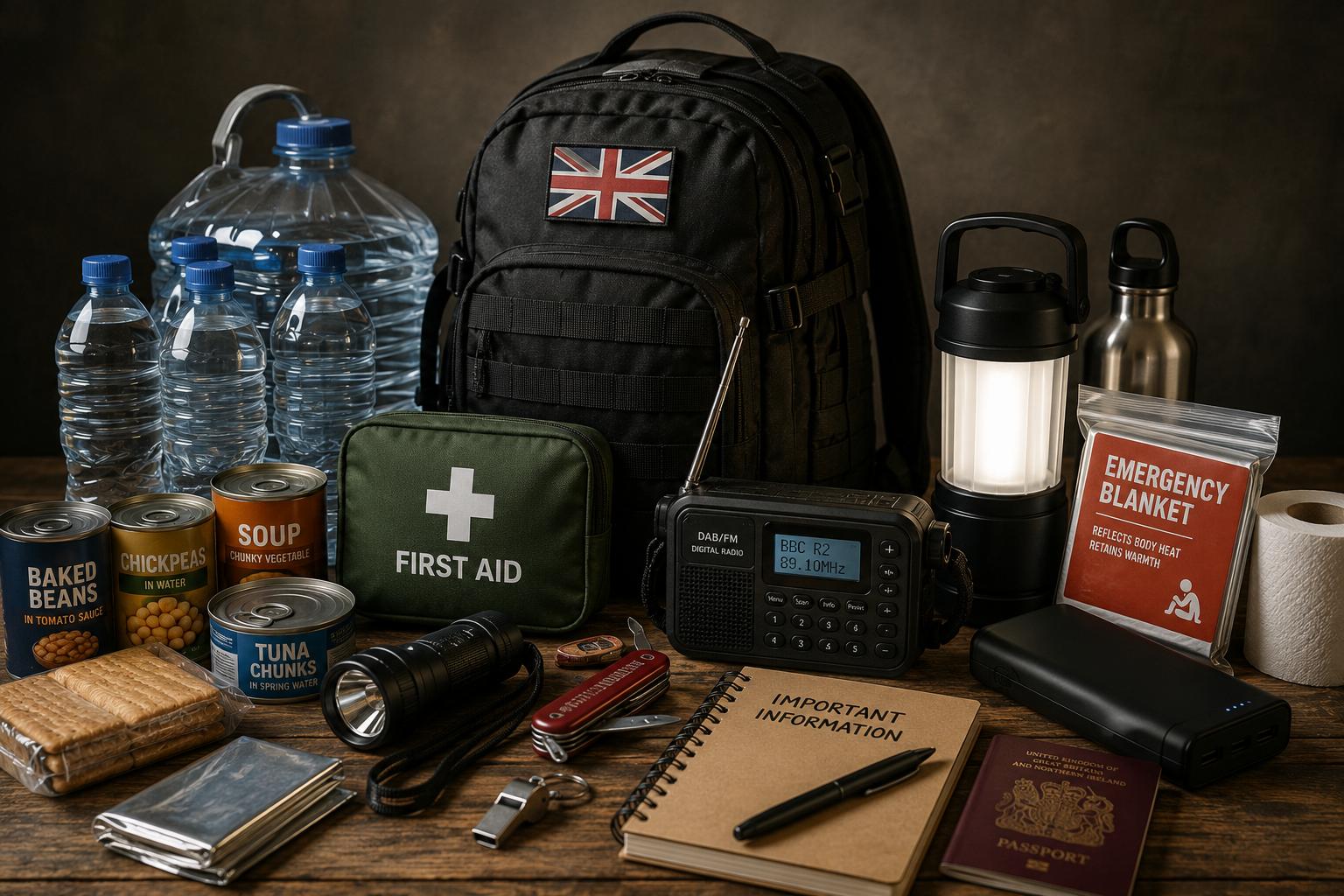
Emergencies rarely arrive at a convenient time. One minute, life is ticking along as normal; the next, you're dealing with a power cut, a burst water main, severe weather or flooding that makes it difficult to leave home.
In those moments, the ordinary things we take for granted suddenly become important. A working torch. A charged mobile phone. Something to eat without turning on the cooker. Enough drinking water to get through the day.
The good news is that preparing for these situations doesn't have to be expensive, complicated or extreme.
A well-planned UK emergency kit is simply a collection of everyday essentials that helps you and your household cope when normal services are disrupted. You don't need a bunker, a cupboard full of expensive survival equipment or hundreds of pounds' worth of specialist gear. You need the right supplies, stored sensibly and ready when you need them.
UK government preparedness guidance encourages households to consider the supplies they might need during an emergency lasting several days, including situations where electricity, water, communications or access to shops may be affected. The aim is to help people cope with short-term disruption while emergency services and other organisations respond.
In this guide, we'll look at what belongs in a home emergency kit, what to pack in a grab bag, and how to build a practical setup without blowing your budget.
Why do you need an emergency kit in the UK?
It's easy to think of emergency preparedness as something for people living in remote locations or preparing for extreme disasters. In reality, some of the most useful preparations are for fairly ordinary problems.
Consider a few realistic examples:
-
Power cuts: Your lights, heating controls, broadband router and some cooking appliances may stop working.
-
Water supply interruptions: You might have little warning before your taps run dry.
-
Flooding and severe weather: Roads may become impassable, public transport may be disrupted and shops may close.
-
Transport disruption: You might be unable to get home or reach work, school or medical appointments.
-
Communications outages: Mobile networks or internet services may become unavailable or congested.
-
Temporary evacuation: A fire, flood or nearby incident could mean leaving your home at short notice.
You don't need to prepare for every possible scenario. Instead, concentrate on the things most likely to affect your household and the everyday essentials that would be difficult to manage without them.
The first target is straightforward: be able to manage for at least 72 hours if normal services are disrupted. Once you've achieved that, you can gradually extend your supplies to cover longer interruptions.
1. Water: your first priority
Water is one of the most important parts of any emergency kit. You can manage without many household conveniences for a while, but going without safe drinking water quickly becomes a serious problem.
The UK government's preparedness guidance recommends planning for around 3 litres of drinking water per person per day, with additional water needed for cooking, washing and other requirements.
For a household of two adults, that gives you the following starting point:
|
Duration |
Drinking water for two adults |
|---|---|
|
24 hours |
6 litres |
|
72 hours |
18 litres |
|
1 week |
42 litres |
These figures cover drinking water, not all household water needs. If your budget and storage space allow, build up additional supplies for basic hygiene and food preparation. People with particular medical needs, babies and pets may require extra water.
What to include:
-
Bottled drinking water, preferably in manageable containers.
-
Food-safe water containers for additional storage.
-
A clean, designated container for collecting water if appropriate.
-
Water purification equipment as a supplementary option, with instructions suitable for the water source.
Remember that a camping filter or purification tablet is not a universal solution for every contaminant. Follow the manufacturer's instructions and local public health advice. If authorities issue a boil-water notice or advise against using a supply, follow that guidance.
Store bottled water according to its label, away from direct sunlight and chemicals, and check it periodically.
2. Emergency food: prepare for three days without cooking
A power cut can make a surprising amount of food in your fridge and freezer difficult to use. Even if the supermarkets remain open, you might not be able to reach them.
Your emergency food supply should contain familiar foods that are easy to eat, require little or no preparation and have a long shelf life.
Good options include:
-
Tinned beans, lentils and chickpeas.
-
Tinned vegetables, fruit and soups.
-
Crackers, oatcakes and crispbreads.
-
Nuts, seeds and dried fruit.
-
Peanut butter or other suitable nut butters.
-
UHT milk or plant-based alternatives.
-
Long-life ready-to-eat meals.
-
Cereal bars and other convenient snacks.
-
Food for babies, where required.
-
Pet food for every animal in your household.
Don't forget a manual tin opener. It is an inexpensive item that becomes extremely useful when an electric opener or kitchen appliances are unavailable.
How much food should you store?
Start with three days of meals and snacks for everyone in your household. Rather than buying specialist emergency rations, you can build a useful supply around foods you already eat.
For example, a vegetarian household could stock tinned beans, chickpeas, lentil meals, crackers, nuts, dried fruit and ready-to-eat grain dishes. Other households might prefer tinned fish, meat or different long-life meals.
The important thing is to choose foods that meet your nutritional needs and that people will actually eat.
Check food allergies, dietary requirements and expiry dates. Rotate supplies by using older items in normal meals and replacing them during your usual shopping trips.
For more resilient cooking arrangements, see our guide to cooking without electricity in the UK.
3. Lighting: don't rely on candles
When the lights go out on a dark winter evening, even a familiar house can become awkward to navigate. Stairs, hallways and kitchens present obvious hazards.
Your emergency kit should contain:
-
A reliable LED torch.
-
Spare batteries, if your torch uses them.
-
A rechargeable lantern for illuminating a room.
-
A head torch for hands-free tasks.
-
A small torch that can be kept beside your bed.
Wind-up torches can be useful because they do not depend on replaceable batteries, although their performance varies.
Keep a torch in an easy-to-reach place rather than buried at the bottom of a storage box. Make sure everyone in the household knows where it is.
Torches and LED lanterns are generally safer than candles because they do not introduce an open flame. If you use any battery-powered equipment, follow its charging and storage instructions.
4. Power and phone charging
Unfortunately, a phone with 2% battery remaining is not much help.
Include the following in your emergency kit:
-
One or more charged power banks.
-
Charging cables for the devices your household uses.
-
A suitable mains charger.
-
A compatible car charger, if useful.
-
Spare batteries for essential equipment.
-
Backup power arrangements for medically necessary devices, where applicable.
Check the actual capacity of your power bank and whether it can charge the devices you rely on. A small power bank may provide only one or two useful charges, depending on the phone and charging losses.
Keep power banks charged in accordance with the manufacturer's guidance, and check them regularly. Don't leave damaged, swollen or overheating batteries in service.
For longer outages, a larger power station or suitable solar charging setup may be useful, but these are optional upgrades rather than the starting point.
5. Emergency radio and communications
If mobile networks or broadband are disrupted, how will you receive reliable information?
A battery-powered or wind-up radio gives you another way to listen to emergency broadcasts and local news. Choose a model that supports the relevant UK radio services in your area, and make sure you understand how to operate it.
Your communications supplies should include:
-
A battery-powered or wind-up radio.
-
Spare batteries or a suitable charging method.
-
A written list of useful local radio frequencies.
-
Printed emergency contact numbers.
-
A paper map of your local area.
-
A notebook and pencil.
A phone can store an enormous amount of information, but paper has one significant advantage: it doesn't need charging.
Write down important family contact details, the numbers for utility providers, insurance details and any essential medical information you may need during an outage.
You could also consider a small battery-powered radio for the car and a plan for contacting family members if you become separated.
For readers interested in communications beyond conventional mobile networks, our guide to LoRa mesh networks in the UK, including MeshCore and Meshtastic explores another option. These systems require suitable equipment and nearby network participants; they should complement, rather than replace, basic emergency communications.
6. First aid and essential medication
A first aid kit is a sensible addition to any home, whether or not you consider yourself a prepper.
It won't replace professional medical treatment, but it can help you deal with minor injuries while you seek appropriate assistance.
Consider including:
-
Assorted plasters.
-
Sterile dressings and bandages.
-
Medical tape.
-
Disposable gloves.
-
Antiseptic products suitable for the intended use.
-
Tweezers and blunt-ended scissors.
-
A digital thermometer.
-
A basic first aid guide.
-
Any other supplies recommended for your household.
Check the contents periodically and replace anything that has expired, been used or become damaged.
Medication deserves special attention
If anyone in your household takes regular prescription medication, plan ahead to avoid running out during a disruption.
Keep medicines in their original packaging where practical, follow the prescribed storage instructions and maintain an up-to-date list of medicines and doses. Request repeat prescriptions in good time rather than waiting until the last available dose.
If you rely on medical equipment, consider what would happen if the electricity supply failed. Speak to your healthcare provider or equipment supplier about suitable backup arrangements.
Never compromise the safe storage of medication or essential medical equipment simply to fit it into an emergency bag. Some items need refrigeration, specialist power supplies or particular handling arrangements.
7. Hygiene and sanitation
Hygiene is easy to overlook when planning an emergency kit. However, a water outage can quickly make ordinary washing and toilet routines difficult.
Add:
-
Hand sanitiser.
-
Wet wipes.
-
Soap and basic toiletries.
-
Toothbrushes and toothpaste.
-
Toilet paper and tissues.
-
Sanitary products.
-
Nappies and baby wipes, where needed.
-
Rubbish bags.
-
Disposable gloves for appropriate tasks.
Households with specific medical or personal care needs should include the products they rely on every day.
If water and sewerage services are affected, follow advice from your water company and local authority regarding safe sanitation and waste disposal. Do not assume that a toilet can be used normally if sewerage services have failed.
8. Warmth, clothing and shelter
British weather can make an otherwise manageable emergency much more uncomfortable. A winter power cut, in particular, may leave a home without its usual heating.
Keep a supply of:
-
Warm blankets or sleeping bags.
-
Thermal layers and spare socks.
-
Hats and gloves.
-
Waterproof jackets.
-
Sturdy footwear.
-
Spare clothing.
-
Emergency blankets for a portable kit.
Think about the people in your household. Young children, older people and anyone with particular medical needs may be more vulnerable to cold conditions.
If your heating stops working, concentrate on keeping people warm safely. Close internal doors where appropriate, use blankets and additional clothing, and follow official advice during severe cold.
Never use barbecues, outdoor camping stoves or fuel-burning heaters in an enclosed home or poorly ventilated space. Carbon monoxide poisoning and fire are serious risks. Only use heating and cooking equipment in the environments for which it is designed.
9. Important documents, cash and household information
An emergency kit is about more than physical survival. It should also help you deal with the practical consequences of an incident.
Consider keeping the following in a waterproof document pouch:
-
Copies of passports and other identification.
-
Insurance policy details and contact numbers.
-
Important medical information.
-
Emergency contacts.
-
Essential household information.
-
Details of any relevant prescriptions or medical equipment.
You don't need to carry original documents in a grab bag if that would expose them to unnecessary risk. Secure digital copies can also be useful, provided you can access them when required.
Keep a modest amount of cash in a secure place. If card payment systems, ATMs or electricity are unavailable, cash may help with small essential purchases. The amount you need will depend on your circumstances.
Also consider spare house or car keys, a pen, paper and a printed local map.
10. Tools and practical extras
A few small items can make a difference when dealing with minor problems around the home.
Useful additions include:
-
A sturdy multi-tool or suitable basic hand tools.
-
Duct tape.
-
Cable ties.
-
Work gloves.
-
A whistle.
-
A small pair of scissors.
-
A waterproof notebook.
-
A few lengths of cord.
-
Reusable bags.
These are supporting items, not substitutes for water, food, medication and lighting. Prioritise the essentials first.
Be sensible about what you store and where. Tools should be safe to use, kept appropriately and secured away from children.
11. Build a grab bag in case you need to leave home
Your home emergency kit is designed to help you manage where you live. A grab bag, sometimes called a bug-out bag, serves a different purpose: it contains the essentials you might need to take with you if you have to leave quickly.
You don't need to carry your entire home emergency supply on your back. The idea is to have a compact, practical bag that makes an unexpected departure less stressful.
A basic grab bag should include:
-
A bottle of drinking water and some ready-to-eat food.
-
A torch and a charged power bank.
-
Your mobile phone and charging cable.
-
Essential medication and relevant medical information.
-
A small first aid kit.
-
A change of underwear and socks.
-
Weather-appropriate clothing.
-
A waterproof layer.
-
Basic toiletries.
-
Cash and bank cards.
-
Emergency contact details on paper.
-
Copies of important documents.
-
Spare glasses, if required.
-
Essential items for children or pets.
Choose a comfortable bag that you can carry without difficulty. Test it by walking a reasonable distance with it packed.
Most importantly, remember that your safety comes before your kit. If there is a fire or another immediate danger, leave without delay. Never waste valuable time collecting belongings when emergency services or official instructions tell you to evacuate.
For a more detailed look at deciding whether to stay home or leave, read our guide to bugging in versus bugging out in the UK.
12. Don't forget your car emergency kit
If you drive regularly, it makes sense to keep a separate set of emergency supplies in your vehicle.
A breakdown on a cold winter evening, a flooded road diversion or getting stranded in severe weather can turn a routine journey into an uncomfortable situation.
Consider including:
-
A high-visibility vest.
-
A torch and spare batteries.
-
A first aid kit.
-
Warm clothing and a blanket.
-
Bottled water and non-perishable snacks.
-
A phone charging cable or car charger.
-
Jump leads or a suitable jump starter.
-
An ice scraper and de-icer.
-
A basic tool kit.
-
A paper road map.
-
A warning triangle, where appropriate and safe to use.
-
A shovel during winter conditions, if suitable for your vehicle and journey.
Keep supplies secured so they cannot become dangerous projectiles during sudden braking. Check food and water storage conditions, particularly during hot weather.
Before setting off in severe weather, check forecasts and road conditions. If authorities advise against travelling, reconsider the journey.
13. A practical UK emergency kit checklist
Use this checklist to assess your current supplies and identify any gaps. You don't need to purchase everything immediately.
Emergency kit checklist
Water and food
Light and communications
Health and hygiene
Warmth and practical supplies
Personal and household needs
14. How to build an emergency kit on a budget
One of the biggest mistakes people make is assuming that emergency preparedness requires a large initial investment.
It doesn't.
You probably already own some of the items on this list. A torch might be in a kitchen drawer, spare blankets may be stored in a cupboard, and your pantry may contain several days' worth of food.
The first step is to take stock of what you have.
The UK government's current preparedness guidance encourages people to check their existing supplies and build their kits gradually, adding items when they can afford them. It also recommends checking supplies regularly, including expiry dates.
Stage 1: Use what you already have
Start with drinking water, cupboard food, a torch, blankets, a first aid kit and any essential medicines. Write down what's missing.
Stage 2: Buy the missing essentials
Prioritise water, food, reliable lighting, phone charging and any household-specific medical needs. Add a radio and hygiene supplies.
Stage 3: Organise and expand
Put supplies somewhere accessible, prepare your grab bag and gradually extend your food and water reserves beyond three days if your space and budget permit.
Don't neglect your emergency plan while concentrating on equipment. Knowing how to contact family members, where to find reliable information and what to do if you need to evacuate costs little or nothing.
15. Store and maintain your emergency supplies
An emergency kit is only useful if it works when you need it.
A torch with flat batteries, an empty power bank or out-of-date food can give you a false sense of security.
Set aside time every six months to check your kit. The UK government's preparedness campaign specifically recommends regular reviews and replacing items that need attention.
During your check:
-
Inspect food and water supplies and replace anything that needs replacing.
-
Test torches, radios and rechargeable equipment.
-
Charge power banks according to the manufacturer's instructions.
-
Check first aid supplies and expiry dates.
-
Review medicines and medical equipment arrangements.
-
Make sure clothing still fits growing children.
-
Replace used items and update documents or contact details.
-
Reassess the needs of pets and other household members.
Store supplies in a dry, accessible location, away from excessive heat and direct sunlight. Keep medicines and hazardous items stored safely.
If you live in an area at risk of flooding, consider whether your storage location could itself become inaccessible or submerged. Important documents and essential supplies should be protected accordingly.
16. What about preparing for a week or longer?
A 72-hour kit is an excellent starting point, but some disruptions can last longer. Severe weather, infrastructure damage or prolonged interruptions to water and electricity may require a more substantial plan.
Once your basic kit is ready, consider gradually expanding it.
|
Supply |
Initial target |
Longer-term improvement |
|---|---|---|
|
Drinking water |
3 days |
Increase reserves and plan safe replenishment |
|
Food |
3 days |
Build a rotating 1–2 week pantry |
|
Lighting |
Torch and spare batteries |
Add room lighting and backup charging |
|
Communications |
Radio and charged power bank |
Add compatible backup power and alternative communications |
|
Warmth |
Blankets and warm clothing |
Improve insulation and safe cold-weather arrangements |
|
Cooking |
Ready-to-eat food |
Add safe, suitable cooking options and fuel storage |
|
Hygiene |
Basic supplies |
Expand toiletries, sanitation and waste arrangements |
Longer-term preparation requires more than multiplying the number of tins in your cupboard. You must also think about water replenishment, safe sanitation, medication supplies, cooking, temperature control and the ability to receive reliable information.
If you plan to use camping equipment, understand its limitations and never use outdoor fuel-burning equipment indoors.
For most households, the sensible approach is to prepare for the first three days, then build on that foundation at a pace that suits their circumstances.
Frequently asked questions about UK emergency kits
What should be in a basic UK emergency kit?
At a minimum, start with drinking water, non-perishable food, a torch, spare batteries, a charged power bank, a radio, first aid supplies, essential medication, hygiene products and written emergency contacts. Add anything your household needs for babies, pets or medical equipment.
How much water should I store per person?
A useful starting point is approximately 3 litres per person per day for drinking. Additional water is needed for cooking, hygiene and other purposes. For a three-day supply, this means 9 litres per person for drinking alone.
Do I need a dedicated survival backpack?
No. A normal, comfortable backpack can work well as a grab bag. The important thing is that it contains useful essentials, is easy to carry and suits your circumstances.
Keep your main home supplies separate so you can remain at home if that is the safest option.
Should I buy specialist emergency food?
Not necessarily. Ordinary foods with a long shelf life are often more affordable and familiar. Choose food that suits your dietary requirements and can be eaten safely with minimal preparation.
Specialist rations may be useful for particular circumstances, but they aren't essential for everyone.
Where should I keep my emergency kit?
Choose a location that is easy to reach, known to everyone in the household and unlikely to become inaccessible during a foreseeable emergency. Keep your grab bag somewhere you can reach quickly if evacuation becomes necessary.
If you must leave because of an immediate danger, leave without delaying to collect your kit.
How often should I check my emergency kit?
Every six months is a useful routine, with additional checks after using supplies, changing medication or equipment, or welcoming a new member to the household. Follow individual product storage and expiry guidance.
Is an emergency kit enough to prepare my household?
No. Supplies are only one part of preparedness. You should also have a household emergency plan, know where to find reliable information, understand local risks and discuss how to contact family members if communications fail.
Final thoughts: start small, but start today
Building a UK emergency kit isn't about expecting the worst. It's about making everyday disruptions easier to manage.
A power cut becomes less stressful when you know where your torch is. A water outage becomes more manageable when you've stored drinking water. And an unexpected evacuation is easier to deal with when essential medication, contact details and important documents are ready.
You don't need to buy everything at once. Start with the basics, use what you already have and add a few items whenever your budget allows.
Your first goal is simple: make sure your household can manage safely for 72 hours. Once you've achieved that, you can build towards a week or longer.
A little preparation today can make a difficult situation tomorrow considerably easier.
Suggested internal links for UKPrepper.me
Explore further preparedness content: