

25 October 2026
FoodIs the UK Government Advice on 72 Hours of Emergency Food and Water Enough?
The UK Government recommends preparing for 72 hours of disruption. But what happens if a power cut, flood or supply disruption lasts longer? Discover how to build on the official advice and develop a realistic emergency food and water strategy for one week, one month and beyond.
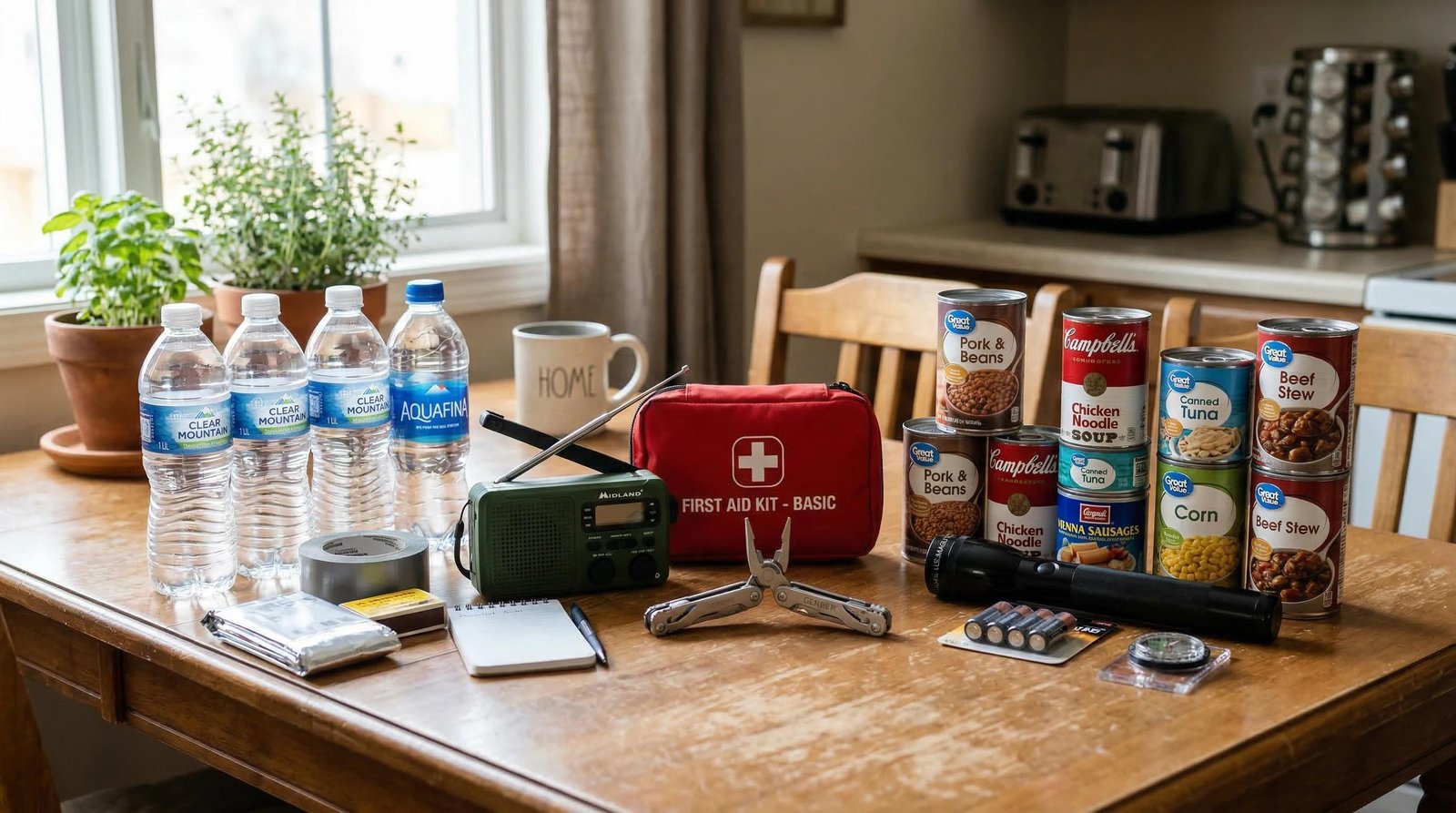
Is Three Days Really Enough?
Imagine waking up on a cold winter morning to find the electricity has gone off. Your heating is no longer working, the internet is down, and your mobile phone has little or no signal. By lunchtime, you discover that the local shops are closed and card payments are not working reliably.
At first, it feels manageable. You have food in the cupboards, bottled water in the garage and a torch somewhere in a drawer.
But what happens if the disruption continues tomorrow? Or for a week?
The UK Government's current Be Ready campaign encourages households to prepare for up to 72 hours of disruption by keeping essential supplies at home. It is sensible advice, and for many people, having three days of food and water would represent a significant improvement on their current level of preparedness.
However, 72 hours should be viewed as a starting point, not necessarily the limit of your emergency preparations.
For UK households, a more resilient approach is to establish a basic three-day reserve, extend it to one week, then gradually build towards a month of food and water where space, finances and circumstances allow.
This isn't about panic buying, filling a spare room with tins or expecting society to collapse. It is about reducing your dependence on shops, deliveries and essential services during periods of disruption.
In this guide, we'll examine the Government's advice, explore its practical limitations and develop a realistic strategy for preparing for three days, one week, one month and beyond.
What Does the UK Government Actually Recommend?
The Government's Be Ready campaign encourages households to prepare for three days of disruption, including situations where access to electricity, water, communications, transport or shops may be affected.
The official checklist recommends:
-
Bottled water for three days.
-
Non-perishable food that can be eaten without cooking.
-
A torch and spare batteries.
-
A battery-powered or wind-up radio.
-
A charged power bank.
-
Essential medication and first-aid supplies.
-
Hygiene products, including hand sanitiser and wet wipes.
-
Warm clothing, blankets and sleeping bags where appropriate.
-
Cash, important documents and written emergency contacts.
-
Additional supplies for babies, children and pets where needed.
The Government recommends approximately 3 litres of drinking water per person per day, with more required for cooking and washing. Its advice also encourages households to build their supplies gradually, check them regularly and prioritise the items most relevant to their own circumstances.
You can read the official guidance on the UK Government's Be Ready website.
The principle is straightforward: being able to manage independently for a few days can make an emergency easier to cope with while assistance and essential services are restored.
That is a good foundation. The question is whether it provides enough resilience for disruptions that continue beyond the initial three days.
Why 72 Hours Might Not Be Enough
Three days is a useful planning period, but emergencies do not follow a timetable.
A short power cut might last only a few hours. A severe storm, widespread flooding or a significant infrastructure problem could have consequences that take much longer to resolve.
There are several reasons to consider building a larger reserve.
1. Essential services may take longer to restore
Even after an immediate emergency has passed, roads may remain blocked, local infrastructure may be damaged and some households may continue to experience interruptions to water or electricity.
The impact will vary considerably depending on the incident and where you live.
2. Shops depend on functioning supply chains
Supermarkets do not simply sell whatever happens to be sitting in a warehouse. Their shelves depend on deliveries, fuel, staff, refrigeration, transport routes, payment systems and functioning distribution centres.
A disruption affecting several of these simultaneously could make normal shopping difficult, even where the shops themselves remain undamaged.
3. Water is more complicated than food
Most households can find a few days' worth of food somewhere in their kitchen. Drinking water is different.
If your mains supply is interrupted, you may not have enough stored water to meet your family's needs. If water quality is affected, the supply might require specific precautions or treatment.
Water also becomes a practical problem much faster than many people expect, particularly in households with children, pets or additional medical needs.
4. Your household may have specific requirements
A family with young children has different requirements from a single adult. Someone who relies on refrigerated medication, specialist nutrition or powered medical equipment will need a more individual plan.
The same applies to people who need particular foods for medical or dietary reasons.
The best emergency plan is built around the people who will actually depend on it.
5. A reserve provides flexibility
A week's worth of supplies does not mean you must stay at home for a week.
It gives you options. You may be able to avoid travelling on dangerous roads, wait for accurate information before making decisions or support a relative who cannot get to the shops.
Of course, no amount of stored food or water replaces an evacuation instruction, emergency medical assistance or advice from the relevant authorities.
The aim is to become more resilient, not self-sufficient in every conceivable circumstance.
Step One: Calculate Your Household's Needs
Before buying anything, work out what you would actually need.
Start with the number of people in your household, including any regular visitors or dependants who might reasonably need support. Add the food and water requirements of pets, babies and anyone with specific dietary or medical needs.
For drinking water, use the Government's recommended planning figure of 3 litres per person per day as a starting point.
That gives us the following figures:
| Duration | Water per person | Water for 2 people | Water for 4 people |
|---|---|---|---|
| 72 hours | 9 litres | 18 litres | 36 litres |
| 1 week | 21 litres | 42 litres | 84 litres |
| 1 month (30 days) | 90 litres | 180 litres | 360 litres |
These are drinking-water planning figures, not complete household water requirements. Cooking, washing, sanitation, hot weather, illness and individual needs can increase consumption significantly.
Notice how quickly the quantities grow. A four-person household would need 84 litres for seven days of drinking water alone. At roughly one kilogram per litre, that represents 84 kg of water, before counting the weight of its containers.
This is why longer-term preparedness needs a different approach to simply buying more bottles.
Step Two: Build a 72-Hour Emergency Reserve
Your first goal is to cover the basics for three days.
There is little point planning for a month if you cannot comfortably get through the first 24 hours without relying on shops or electricity.
Food for the first three days
Choose foods that you already enjoy, that store safely and that require little or no preparation.
Useful options include:
-
Tinned beans, lentils and chickpeas.
-
Tinned vegetables, fruit and soups.
-
Tinned fish or meat, if these fit your diet.
-
Crackers, oatcakes and crispbreads.
-
Peanut butter and other suitable nut or seed butters.
-
UHT milk or suitable plant-based alternatives.
-
Breakfast cereals and porridge products that can be prepared without cooking.
-
Dried fruit, nuts and energy-dense snacks.
-
Ready-to-eat meals with an appropriate shelf life.
If you follow a vegetarian diet, beans, lentils, chickpeas, nuts and suitable ready-to-eat meals can provide useful protein and energy.
Do not assume that every food labelled as long-life can be eaten without preparation. Dried pasta, rice and many other staples require cooking and water.
Keep a manual tin opener with your emergency supplies. It is a small item that can make a considerable difference if the power is out.
Water for the first three days
Store commercially bottled water in a cool, dark place away from chemicals, fuel and direct sunlight. Follow the manufacturer's storage guidance and check container integrity periodically.
Keep a separate supply of water for pets and account for any additional requirements for babies or medical care.
If you use a private water supply, investigate the specific risks and arrangements that apply to your property.
Make the reserve accessible
Emergency supplies should be easy to locate when the lights are off. You might keep food together in a cupboard, drinking water in a suitable storage area and essential equipment in a labelled box.
Avoid placing heavy water containers somewhere they are difficult or unsafe to retrieve.
Once your three-day reserve is complete, you have established the first layer of your preparedness plan.
Step Three: Extend Your Supplies to One Week
A seven-day reserve is a useful next objective because it gives you more breathing room if shops, transport or deliveries are disrupted.
The best way to achieve it is to extend your existing reserve rather than buying an entirely separate collection of emergency products.
Expand your food storage
Aim to cover seven days of meals and snacks for every household member.
A simple approach is to plan a week's worth of breakfasts, lunches, dinners and snacks using food that has a suitable shelf life.
For example:
| Food group | Examples |
|---|---|
| Protein | Tinned beans, lentils, chickpeas, fish, meat or nut butter |
| Carbohydrates | Oats, crackers, cereals, bread with suitable storage, rice and pasta |
| Fruit and vegetables | Tinned fruit, tinned vegetables and dried fruit |
| Fats and extra energy | Nuts, seeds, olive oil and suitable spreads |
| Dairy or alternatives | UHT milk, long-life plant drinks and suitable shelf-stable products |
| Flavour and variety | Stock cubes, herbs, spices, sauces and condiments |
Remember that dried staples generally require water and cooking. If you store them, consider how you would prepare them during a power cut.
For a seven-day reserve, convenience is often worth more than perfect variety. Food that can be eaten safely without electricity or additional cooking is especially useful.
Extend your water supply
For one adult, the drinking-water target becomes 21 litres for seven days.
You can store that quantity if you have the space, but a larger household may need to combine stored water with a well-planned response to an extended interruption.
Think about:
-
Where the containers will be stored.
-
Whether the floor or shelving can support their weight.
-
How you will rotate supplies and identify damaged containers.
-
What official advice you would follow if mains water became unsafe.
-
How you would obtain additional water if the interruption continued.
Do not assume rainwater, river water or water from a garden water butt is safe to drink. Water treatment is only appropriate when the source and likely contaminants are understood and the method is suitable for them.
Review your cooking options
A week of food is less useful if most of it needs cooking and you cannot safely prepare it.
Prioritise meals that can be eaten cold or prepared with minimal equipment. If you keep a camping stove or other alternative cooking appliance, follow its safety instructions.
Never use a barbecue, charcoal burner or camping stove indoors or in an enclosed space. Carbon monoxide can build up to fatal levels without warning. Use outdoor cooking equipment outdoors, away from doors, windows and vents, and follow the manufacturer's clearance instructions.
At this stage, you should be able to manage for a week without depending entirely on normal shopping trips.
Step Four: Build Towards One Month of Food
A month's supply sounds daunting, but it becomes much more manageable when you approach it as a gradual extension of your ordinary household pantry.
Start with food you regularly eat. Buy a little extra when your budget allows, use the oldest suitable stock first and replace what you consume.
This is a rotating food reserve rather than a forgotten stockpile.
Build a balanced long-term food supply
For longer storage, concentrate on several complementary food groups.
1. Staple carbohydrates
Rice, pasta, oats, flour and other grains can provide energy and form the basis of many meals. Check storage conditions and remember that some require water, heat and additional ingredients.
2. Protein sources
Tinned beans, chickpeas, lentils, fish and meat are convenient options. Dried pulses can be economical, but generally require soaking or cooking depending on the product.
3. Fats and calorie-dense foods
Cooking oils, nuts, seeds and suitable spreads provide energy without requiring large storage volumes. Check shelf life carefully, as fats can become rancid.
4. Fruit and vegetables
Tinned produce is convenient because it is already prepared. Choose products you will use normally, and consider whether they can be eaten cold.
5. Milk and alternatives
UHT milk and suitable long-life alternatives can be useful, but check storage instructions and use them within the specified period after opening.
6. Flavour and variety
Salt, stock, herbs, spices, sauces and other familiar ingredients can make a basic food supply much more enjoyable.
The goal is not to survive on a mountain of rice and beans. It is to maintain a reasonably varied diet for as long as possible.
How much food should you store?
Rather than prescribing a universal number of tins, calculate the actual meals your household consumes.
Keep a simple record of the food used over a normal week. Identify which items store well, then work out how much you would need for 30 days.
As a rough planning exercise, a household of four eating three meals per person per day would need to plan for approximately 360 individual meals over 30 days, before adding snacks. Some meals can share ingredients, and some foods can provide several portions.
This illustrates why planning a menu is more effective than buying random quantities of food.
If you want to build a calorie-based reserve, estimate each person's usual energy needs rather than assuming everyone needs the same amount. Children, adults with different activity levels and people with specific medical needs will not have identical requirements.
Where possible, choose foods that offer a balance of energy, protein, fibre and micronutrients.
Store food properly
Food storage only works if the food remains safe to eat.
-
Keep dry goods sealed against moisture and pests.
-
Follow the manufacturer's storage instructions.
-
Store food away from heat and direct sunlight.
-
Label opened or repackaged items clearly.
-
Rotate supplies according to dates and storage guidance.
-
Never rely on appearance or smell alone to establish that a food is safe.
For home-preserved foods, use tested preservation methods and appropriate equipment. Improperly canned low-acid foods can cause serious foodborne illness.
A well-managed pantry is much more useful than a large collection of food that has expired, deteriorated or become infested.
Step Five: The Challenge of Storing a Month of Water
Food is relatively straightforward to store for a month. Water is the more difficult part of a long-term plan.
At the Government's suggested drinking-water figure, one adult requires 90 litres for 30 days. A household of four requires 360 litres, excluding cooking and hygiene.
That is a substantial quantity for many British homes, especially flats and properties without garages or dedicated storage rooms.
It is worth separating your water strategy into three parts.
1. Store what is practical
Keep a suitable reserve of commercially bottled water or water stored in containers specifically designed for drinking water.
For longer storage, follow the manufacturer's instructions regarding container suitability, sanitation, storage and replacement. Do not assume that ordinary household containers are appropriate for drinking water.
2. Understand your alternative sources
Investigate realistic options before an emergency occurs.
Depending on your circumstances, these might include an official emergency water distribution point, a reliable alternative supply or a suitable water treatment system.
A water filter does not automatically remove viruses, chemicals, salts or every other possible contaminant. Boiling can kill many disease-causing organisms but will not remove chemical contamination.
Follow advice from your water company, local authority and emergency services if a supply is interrupted or contaminated.
3. Plan for non-drinking water needs
Drinking is not the only use of water. Cooking, handwashing, cleaning and sanitation can add considerably to demand.
Reduce unnecessary water use where possible. Keep suitable hygiene supplies available, including wet wipes, hand sanitiser and rubbish bags.
If the water supply fails, do not assume that your toilets, drainage or wastewater systems will continue to work normally. Understand what arrangements are appropriate for your property and follow local public-health advice.
For a one-month preparedness plan, the aim should be to combine a realistic stored reserve with a safe, credible strategy for obtaining additional water. A treatment device alone is not a complete water plan.
Step Six: Preparing for Two Months, Three Months and Beyond
Once your household can manage for a month, the next step is not necessarily to double every item in your cupboard.
Longer-term resilience is about making your supplies sustainable, manageable and adaptable.
Build a deeper food rotation
Gradually increase your pantry reserve while continuing to eat and replace the food.
Where storage space and finances permit, you might work towards six to eight weeks of food, then two or three months.
The appropriate target depends on your household, likely local risks, storage space and budget. There is no universal requirement for every household to hold three months of supplies.
Consider whether your menu remains practical over time. A reserve containing large quantities of dry staples but very little variety, fat or protein may not meet your needs as well as you expect.
Consider shelf-stable foods with longer storage lives
Some commercially packaged foods have longer shelf lives than ordinary supermarket products. Specialist emergency meals and freeze-dried foods can be useful in particular circumstances, but compare cost per serving, nutritional content, preparation requirements and storage conditions.
Do not assume that a product marketed for emergency use is automatically nutritionally complete or suitable for everyone.
Develop a realistic water contingency plan
Long-term water resilience may require more than household storage. Depending on where you live, consider how you would access safe supplies if mains water remained unavailable.
Any private water source needs to be assessed for reliability, contamination risks, treatment requirements and legal restrictions.
For households dependent on mains water, maintaining enough storage for a practical initial period and knowing where to obtain official assistance may be more realistic than attempting to store months of water.
Plan for the things that make supplies usable
Longer-term preparedness also requires:
-
A safe way to prepare food when electricity is unavailable.
-
Essential medication and an appropriate plan for repeat prescriptions.
-
Hygiene and sanitation supplies.
-
A method of receiving official information.
-
Lighting, phone charging and spare batteries.
-
Warm clothing and bedding.
-
Cash and copies of important documents.
-
A plan for pets and anyone who needs additional support.
These are not optional extras if your food reserve depends on equipment or utilities that may fail.
A Practical Food and Water Progression
The following framework provides a manageable way to build your household reserve over time.
| Stage | Food objective | Water objective | Main priority |
|---|---|---|---|
| First 72 hours | Three days of ready-to-eat or easily prepared food | 3 litres per person per day for drinking | Establish the essentials |
| 1 week | Seven days of meals and snacks | 21 litres per person for drinking | Extend supplies and cooking options |
| 1 month | A planned, rotating 30-day pantry | 90 litres per person for drinking, plus a wider supply plan | Storage, rotation and safe water access |
| 2–3 months | A larger pantry built around regular meals | Maintain a practical reserve and reliable contingency arrangements | Sustainability and household-specific needs |
| Beyond 3 months | Longer-term food resilience appropriate to your circumstances | A credible, safe and sustainable water strategy | Adaptability, replenishment and local resources |
The water figures are based on the Government's 3-litre daily drinking-water recommendation. They do not represent a complete allowance for cooking, washing or sanitation.
You do not have to reach every stage. Even moving from no reserve to three days, or from three days to one week, can make a meaningful difference.
How to Build Your Supplies on a Budget
Preparedness should not come at the expense of rent, bills, debt repayments or everyday food.
The Government itself recommends building supplies gradually. That is also the approach most households are likely to find sustainable.
Use your normal shopping routine
When a product you regularly use is on offer, consider buying an additional item if your budget allows and you have room to store it safely.
For example, an extra tin of beans, a packet of oats or a bottle of water each week can steadily build your reserve without requiring a large one-off purchase.
Start with what you already own
Before shopping, check your kitchen cupboards, freezer and other suitable storage areas. You may already have several days' worth of useful food.
Make a list of what you have and identify the gaps.
Avoid buying food you would never normally eat
An emergency reserve is not much use if the contents are unfamiliar, unsuitable for your diet or unpleasant enough that you avoid rotating them.
Choose familiar foods and build meals around ingredients you already know how to prepare.
Rotate as you go
Use the oldest suitable stock first and replace it during ordinary shopping. Check dates, packaging and storage conditions regularly.
The aim is to create a pantry that is always useful, rather than a collection of emergency products that eventually needs to be discarded.
Prioritise water and essential needs
If money is tight, focus first on drinking water, suitable food, necessary medication, lighting and communication. Add the other items as you can.
Preparedness should improve your financial resilience, not undermine it.
Common Mistakes to Avoid
Even a well-intentioned preparedness plan can have gaps.
Buying food without a meal plan. A cupboard full of ingredients does not guarantee that you can prepare balanced meals. Check what equipment and water each food requires.
Underestimating water. Remember that the basic drinking-water figure excludes most cooking and hygiene needs.
Relying entirely on dry food. Rice, pasta and dried pulses often need water and heat. Keep some food that can be eaten safely without cooking.
Ignoring household-specific needs. Account for children, pets, medical requirements, dietary restrictions and essential equipment.
Forgetting to rotate supplies. Old food and poorly stored water can become unusable, wasting both money and effort.
Assuming all water can be made safe with a filter. Treatment depends on the source and the contaminants involved. Follow authoritative guidance.
Using outdoor cooking equipment indoors. Never use a barbecue, charcoal burner or camping stove inside a home, tent, garage or other enclosed space because of carbon monoxide risk.
Treating preparedness as a reason to ignore official advice. If emergency services tell you to evacuate, do so. Stored supplies are not a reason to remain in an unsafe building.
Your Next Steps: A Simple Preparedness Checklist
Use this checklist to assess where you are now and decide what to do next.
-
Check your existing food and drinking-water supplies.
-
Calculate the needs of everyone in your household.
-
Establish a three-day reserve of food and water.
-
Include a manual tin opener and food that does not need cooking.
-
Add essential medication, first aid and hygiene supplies.
-
Keep a torch, spare batteries, radio and charged power bank.
-
Plan how to manage if electricity or mains water is interrupted.
-
Extend your supplies to seven days.
-
Develop a realistic plan for a month of food and safe water access.
-
Review your supplies every six months, or sooner where storage guidance requires it.
-
Check local risks, emergency alerts and official advice.
-
Discuss your plan with household members and neighbours who may need support.
You can also use the Government's official Be Ready checklist as the foundation for your household plan.
Final Thoughts: Three Days Is a Beginning, Not a Guarantee
The UK Government's 72-hour advice is a sensible and accessible starting point. It encourages people to take practical steps before an emergency occurs, and it recognises that households can build their preparations gradually.
But three days of food and drinking water is not a guarantee that every emergency will be manageable within that period.
For households that have the space and means, extending the reserve to one week is a useful next step. Working towards a month of food can provide greater flexibility, while longer-term preparedness requires careful attention to safe water access, replenishment, storage and household needs.
There is no need to accomplish everything at once.
Start with the basics. Build on them when you can. Keep your supplies useful by rotating them, and make sure your plan works in the home you actually live in.
The best emergency reserve is not the biggest one. It is the one you can afford, maintain and use safely when you need it.
Further reading on UKPrepper.me
Add links to relevant articles on your site where available:
-
How to Prepare for a Power Cut in the UK — practical steps for coping when electricity fails.
-
Cooking Without Electricity in the UK — safe alternatives when normal cooking facilities are unavailable.
-
Emergency Cash at Home in the UK — preparing for temporary disruption to card payments and cash machines.
- UK Emergency Kit: What Should You Include? Essential Checklist- Build your own emergency kits for home and car, with useful checklists.